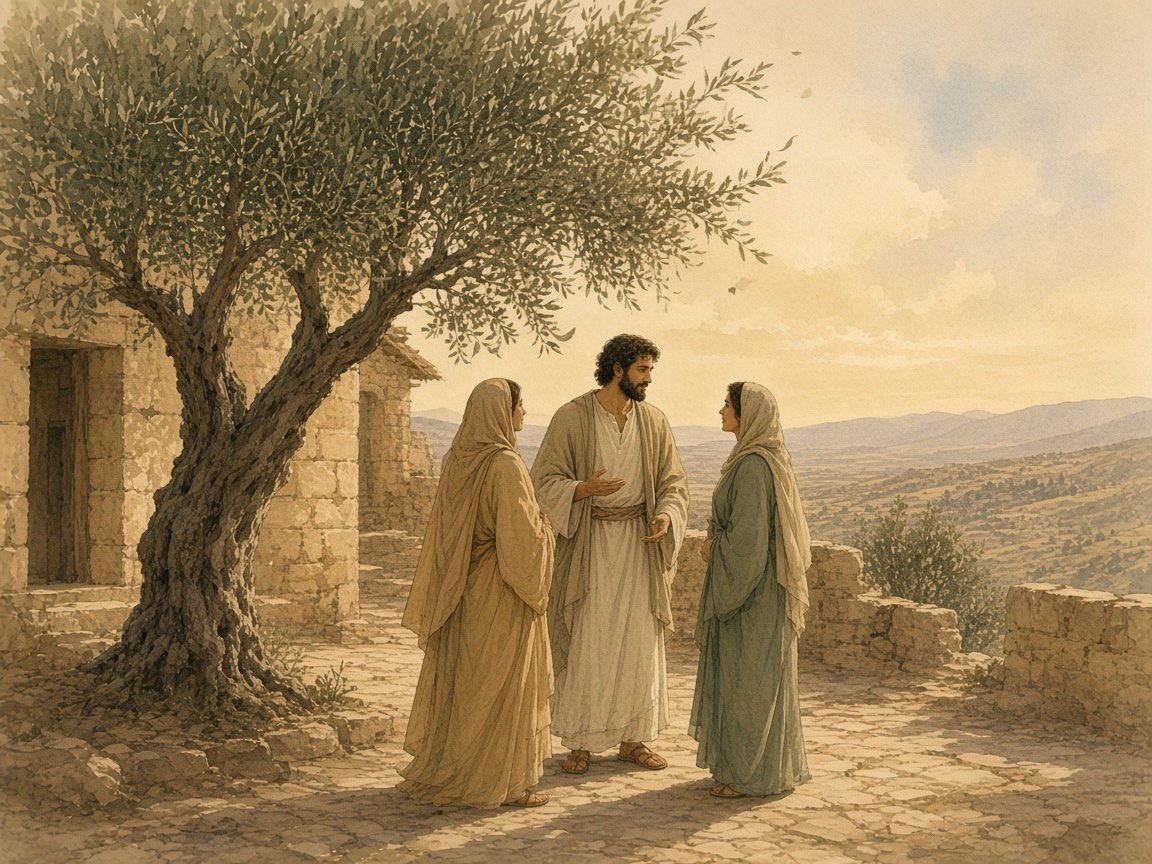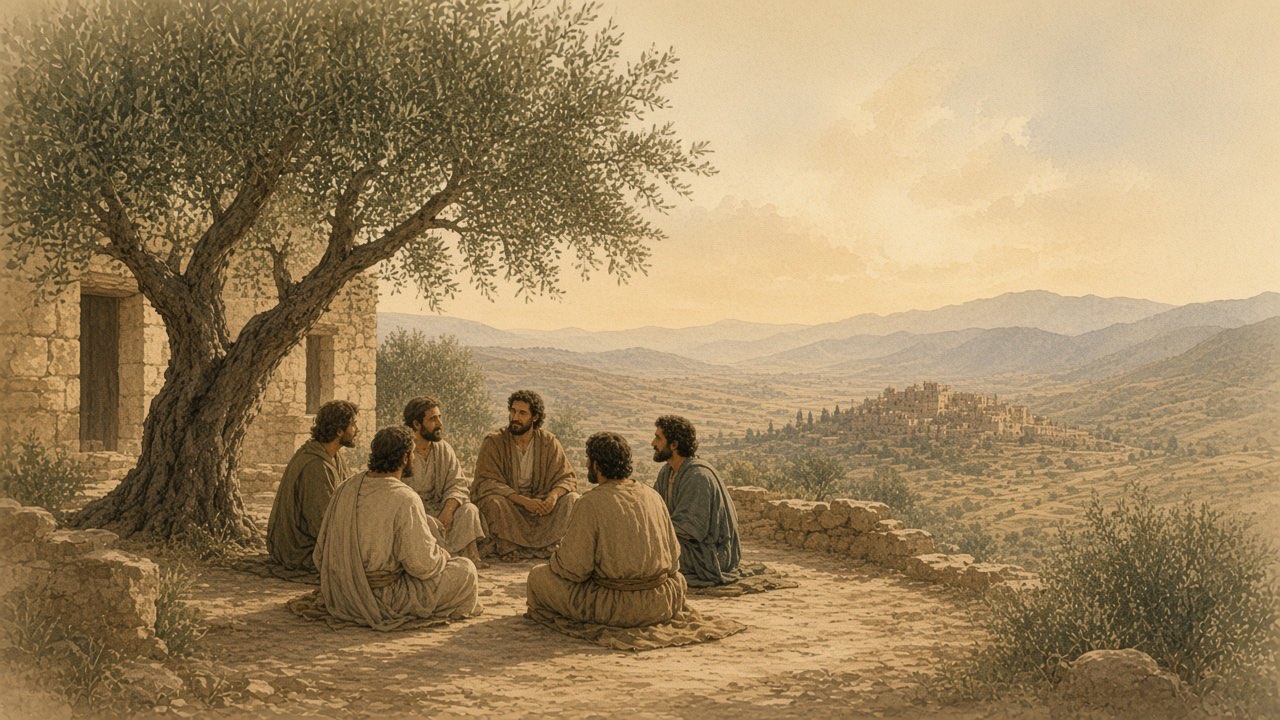
"All of them were filled with the Holy Spirit and began to speak in other tongues as the Spirit enabled them."
— Acts 2:4 (NIV)
People who search bible verses about speaking in tongues usually want the actual passages in one place — what happened at Pentecost, what Paul told the church in Corinth, and how tongues relate to love and order in worship. This page is a numbered list of twelve passages with the NIV text and a short note on each. Christians in different traditions read these passages differently; this page sets out what the texts say rather than settling every debate. Related lists: Bible verses about the Holy Spirit, Bible verses about spiritual gifts, Bible verses about Pentecost, Bible verses about the church, and Bible verses about prayer. The wider essay sits under Love and the Holy Spirit.
Word study (lead theme). In Greek, "tongue" is γλῶσσα glōssa (Strong's G1100; Bible Hub G1100) — the physical tongue, and by extension a language. "Interpretation" in 1 Corinthians 12:10 is ἑρμηνεία hermēneia (Strong's G2058; Bible Hub G2058) — translation or explanation, so that what is said can be understood.
Matthew Henry's Concise Commentary on 1 Corinthians 14 presses Paul's concern for understanding in the gathered church: "Even an apostle could not edify, unless he spoke so as to be understood by his hearers" (Bible Hub MHC 1 Corinthians 14; Bible Hub commentaries on 1 Corinthians 14:2). On Acts 2 see the Bible Hub commentaries on Acts 2:4.
Free PDF
Get the free 30 Days of Love Verses PDF
Sign up for the daily Bible verse email, and get the free 30 Days of Love Verses PDF. 30 Days of Love Verses · Open the PDF
12 Bible verses about speaking in tongues
Acts 2:4. "All of them were filled with the Holy Spirit and began to speak in other tongues as the Spirit enabled them." At Pentecost the speaking is the Spirit's enabling, not a human technique. See Bible verses about Pentecost.
Acts 2:6. "When they heard this sound, a crowd came together in bewilderment, because each one heard their own language being spoken." In Acts 2 the hearers recognize their own languages — the gospel crossing language lines on day one.
Acts 10:45-46. "The circumcised believers who had come with Peter were astonished that the gift of the Holy Spirit had been poured out even on Gentiles. For they heard them speaking in tongues and praising God." Tongues here mark that Gentiles have received the same Spirit — welcome, not rank.
Acts 19:6. "When Paul placed his hands on them, the Holy Spirit came on them, and they spoke in tongues and prophesied." In Ephesus the Spirit's coming is again audible, alongside prophecy. See Bible verses about the Holy Spirit.
1 Corinthians 12:10. "...to another speaking in different kinds of tongues, and to still another the interpretation of tongues." Tongues and interpretation sit in a list of gifts given by one Spirit for the common good. See Bible verses about spiritual gifts.
1 Corinthians 12:30. "Do all have gifts of healing? Do all speak in tongues? Do all interpret?" Paul's questions expect the answer no — gifts are distributed, and no single gift is the badge of belonging.
1 Corinthians 13:1. "If I speak in the tongues of men or of angels, but do not have love, I am only a resounding gong or a clanging cymbal." Without love, even tongues become noise. See Love is patient, love is kind and 1 Corinthians 13:4-7.
1 Corinthians 14:2. "For anyone who speaks in a tongue does not speak to people but to God. Indeed, no one understands them; they utter mysteries by the Spirit." Paul describes uninterpreted tongues as speech directed to God, not instruction for the room.
1 Corinthians 14:4. "Anyone who speaks in a tongue edifies themselves, but the one who prophesies edifies the church." The measure Paul keeps using is who is built up. See Bible verses about the church.
1 Corinthians 14:18-19. "I thank God that I speak in tongues more than all of you. But in the church I would rather speak five intelligible words to instruct others than ten thousand words in a tongue." Paul values the gift and still puts understandable words first when the church gathers.
1 Corinthians 14:27-28. "If anyone speaks in a tongue, two—or at the most three—should speak, one at a time, and someone must interpret. If there is no interpreter, the speaker should keep quiet in the church and speak to himself and to God." Order and interpretation are part of the instruction, not an afterthought.
1 Corinthians 14:39-40. "Therefore, my brothers and sisters, be eager to prophesy, and do not forbid speaking in tongues. But everything should be done in a fitting and orderly way." Paul's closing word holds two things together: do not forbid, and keep it orderly. See Bible verses about worship.
How to use these verses
Read them in their settings rather than one at a time. For what happened at Pentecost, start with Acts 2:4-6. For how Paul guided a church that prized the gift, read 1 Corinthians 12–14 straight through, with chapter 13 in the middle. If your question is about your own prayer life, Romans 8:26 is a good companion (see Bible verses about prayer). For the Spirit's wider work, see Bible verses about the Holy Spirit. For a daily verse, open Bible verse of the day.
Questions people ask
What does the Bible say about speaking in tongues?
Acts records believers speaking in tongues when the Spirit came (Acts 2:4; 10:46; 19:6), and 1 Corinthians 12–14 treats tongues as one gift among many, to be used with love (1 Corinthians 13:1), with interpretation, and in an orderly way (1 Corinthians 14:27-28, 39-40).
Where is speaking in tongues in the Bible?
The main passages are Acts 2, Acts 10:44-46, Acts 19:1-7, and 1 Corinthians 12–14. Mark 16:17 also mentions new tongues, in a section that many Bibles footnote because it is missing from some early manuscripts.
Does everyone speak in tongues?
In 1 Corinthians 12:30 Paul asks, "Do all speak in tongues?" — a question that expects no. He presents gifts as distributed by the Spirit for the common good (1 Corinthians 12:7, 11). Churches differ on how these gifts apply today.
What is the interpretation of tongues?
It is a gift listed in 1 Corinthians 12:10 (hermēneia, G2058): making what was spoken in a tongue understandable to others. Paul says that without an interpreter, the speaker should keep quiet in the church (1 Corinthians 14:28).
Where should I read next?
Start with Bible verses about the Holy Spirit, then Bible verses about spiritual gifts, Bible verses about Pentecost, and Love and the Holy Spirit.
Sources
- Strong's G1100 (glōssa) — Blue Letter Bible lexicon; Bible Hub Greek 1100
- Strong's G2058 (hermēneia) — Blue Letter Bible lexicon; Bible Hub Greek 2058
- Matthew Henry Concise on 1 Corinthians 14 — Bible Hub MHC 1 Corinthians 14; Bible Hub 1 Corinthians 14:2 commentaries
- Acts 2:4 commentaries — Bible Hub Acts 2:4