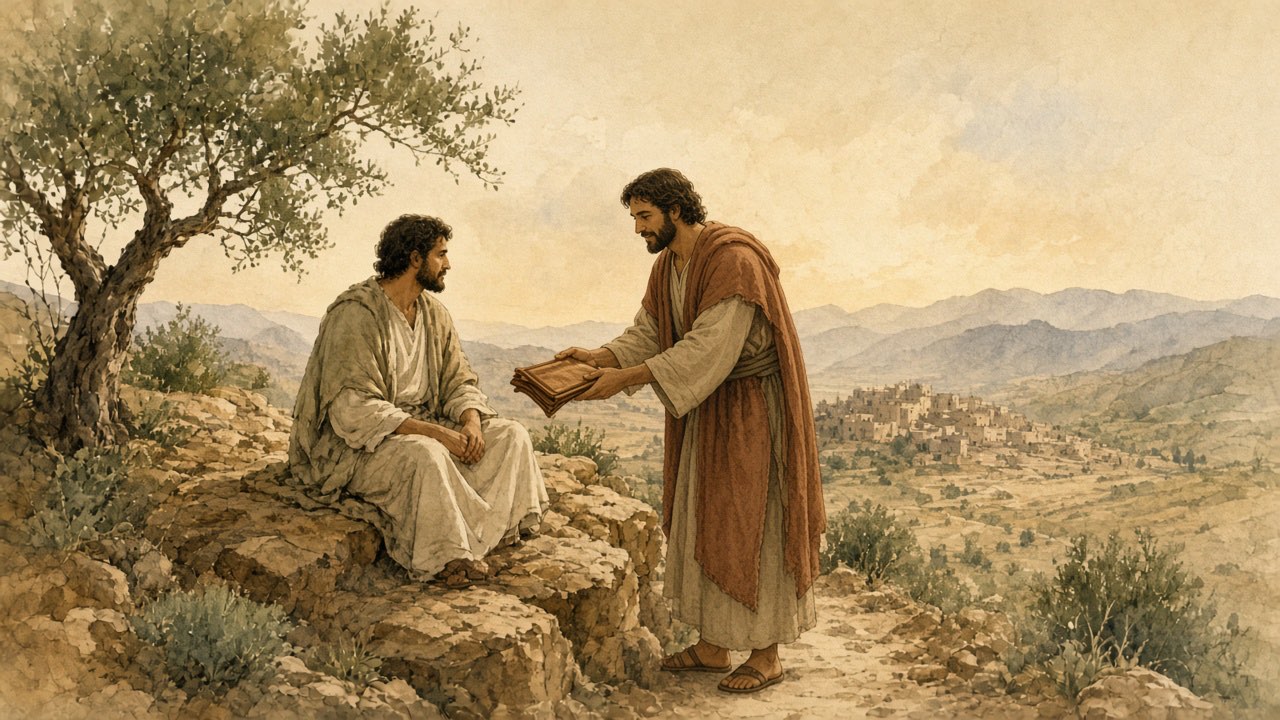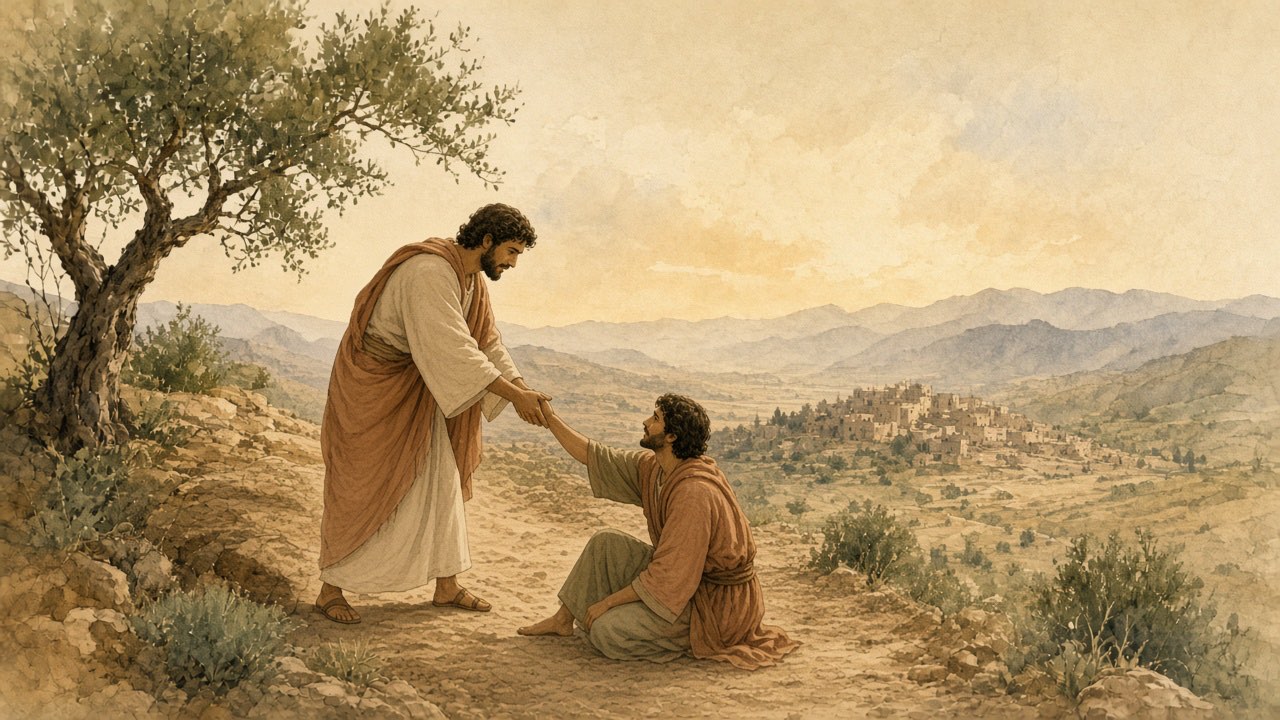
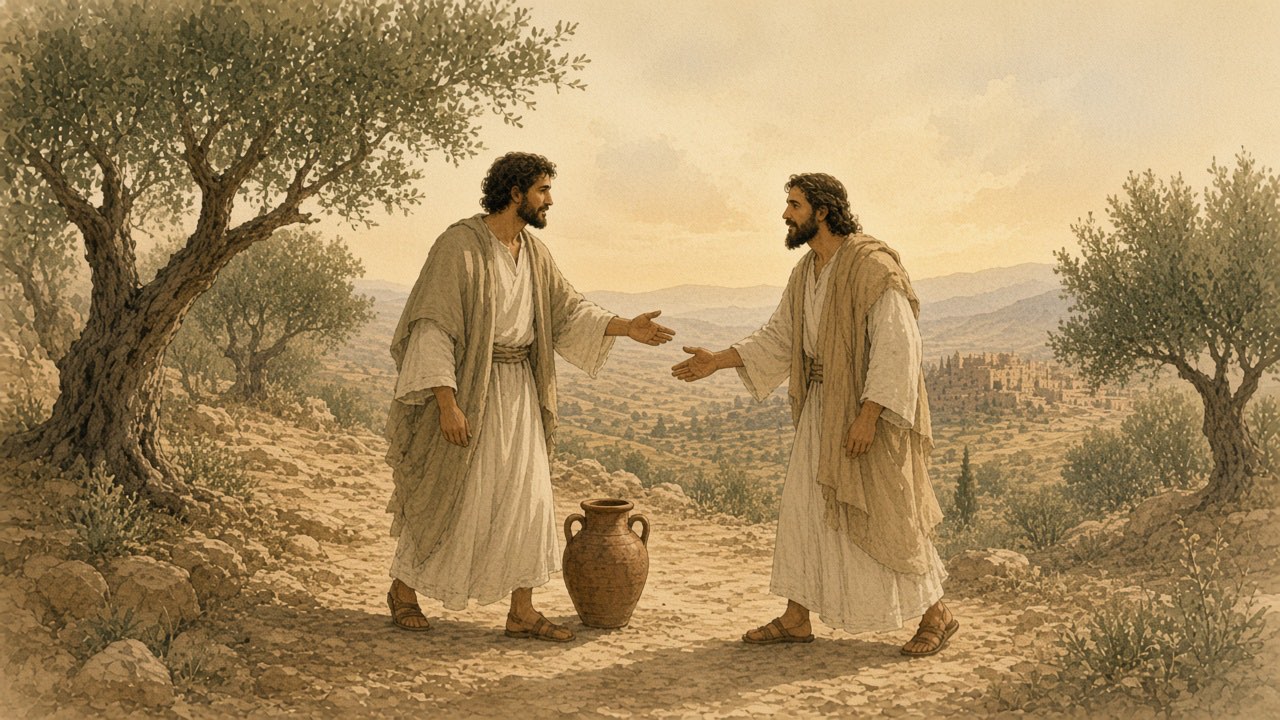
"Then Peter came to Jesus and asked, 'Lord, how many times shall I forgive my brother or sister who sins against me? Up to seven times?' Jesus answered, 'I tell you, not seven times, but seventy-seven times.'"
— Matthew 18:21-22 (NIV)
Matthew 18:21-22 is where the phrase "seventy times seven" comes from. Peter asks for a limit on forgiveness, and Jesus gives him a number so large it stops being a limit. This page gives the verses, what the key Greek words mean, the parable Jesus tells next, and a plain reading. For more on the theme, see Bible verses about forgiveness and Love and forgiveness.
Free PDF
Get the free 30 Days of Love Verses PDF
Sign up for the daily Bible verse email, and get the free 30 Days of Love Verses PDF. 30 Days of Love Verses · Open the PDF
The verses
The King James reads: "Then came Peter to him, and said, Lord, how oft shall my brother sin against me, and I forgive him? till seven times? Jesus saith unto him, I say not unto thee, Until seven times: but, Until seventy times seven."
"Forgive" is aphiēmi (G863), to let go or release, the way a debt is cancelled. "Sin against" is hamartanō (G264), to miss the mark or do wrong. "Seven times" is heptakis (G2034), and Jesus's answer uses hebdomēkontakis (G1441), "seventy times."
Seventy-seven or seventy times seven?
The Greek phrase can be read either way, which is why the NIV says "seventy-seven times" and the KJV says "seventy times seven." The NIV notes the other reading in a footnote. Either way the point is the same: Peter offered seven, which already felt generous, and Jesus answered with a number nobody keeps count of.
Where it sits in Matthew 18
Just before this, Jesus teaches how to go to a brother or sister who has wronged you and try to win them back (Matthew 18:15-17). Peter's question follows naturally: if it keeps happening, when can I stop?
Jesus answers with a parable (Matthew 18:23-35). A servant owes a king a debt he could never repay, and the king cancels all of it. That same servant then finds a fellow servant who owes him a small amount and has him thrown into prison. The king calls him back and asks, "Shouldn't you have had mercy on your fellow servant just as I had on you?" (Matthew 18:33). Jesus ends, "This is how my heavenly Father will treat each of you unless you forgive your brother or sister from your heart" (Matthew 18:35). It is the same teaching as Matthew 6:14-15, told as a story.
What the verses are saying
Peter's question assumes forgiveness is a supply that can run out. Jesus's answer says it isn't, because the person forgiving has already been forgiven a debt far larger than anything owed to them.
Forgiving seventy-seven times does not mean pretending nothing happened or staying somewhere unsafe. It means refusing to keep a running tally, the same thing Paul says when he writes that love "keeps no record of wrongs" (1 Corinthians 13:5). Repair and trust can take time; letting go of the debt is the part Jesus asks for every time.
Questions people ask
What does Matthew 18:21-22 say?
In the NIV: "Then Peter came to Jesus and asked, 'Lord, how many times shall I forgive my brother or sister who sins against me? Up to seven times?' Jesus answered, 'I tell you, not seven times, but seventy-seven times.'" The KJV ends, "I say not unto thee, Until seven times: but, Until seventy times seven."
What does "seventy times seven" mean?
It means forgiveness without a limit you keep count of. The Greek can be read as seventy-seven or as seventy times seven, and translations differ, but neither is a number to track. Jesus is answering Peter's request for a cap by refusing to give one.
Do I have to forgive someone who keeps hurting me?
Jesus asks for forgiveness every time, which means letting go of the debt rather than holding it against the person. Forgiveness is not the same as trusting someone again right away or staying in harm's way. Matthew 18:15-17 shows that wrongs can still be named and addressed.
What parable comes after Matthew 18:21-22?
The parable of the unmerciful servant (Matthew 18:23-35). A servant forgiven a huge debt refuses to forgive a small one, and the king holds him to account. It shows why Jesus answers Peter the way he does.
What verses go with Matthew 18:21-22?
Matthew 6:14-15 (if you forgive others, your Father will forgive you), Colossians 3:13 (forgive as the Lord forgave you), Ephesians 4:32, and 1 Corinthians 13:5 (love keeps no record of wrongs) are close companions.