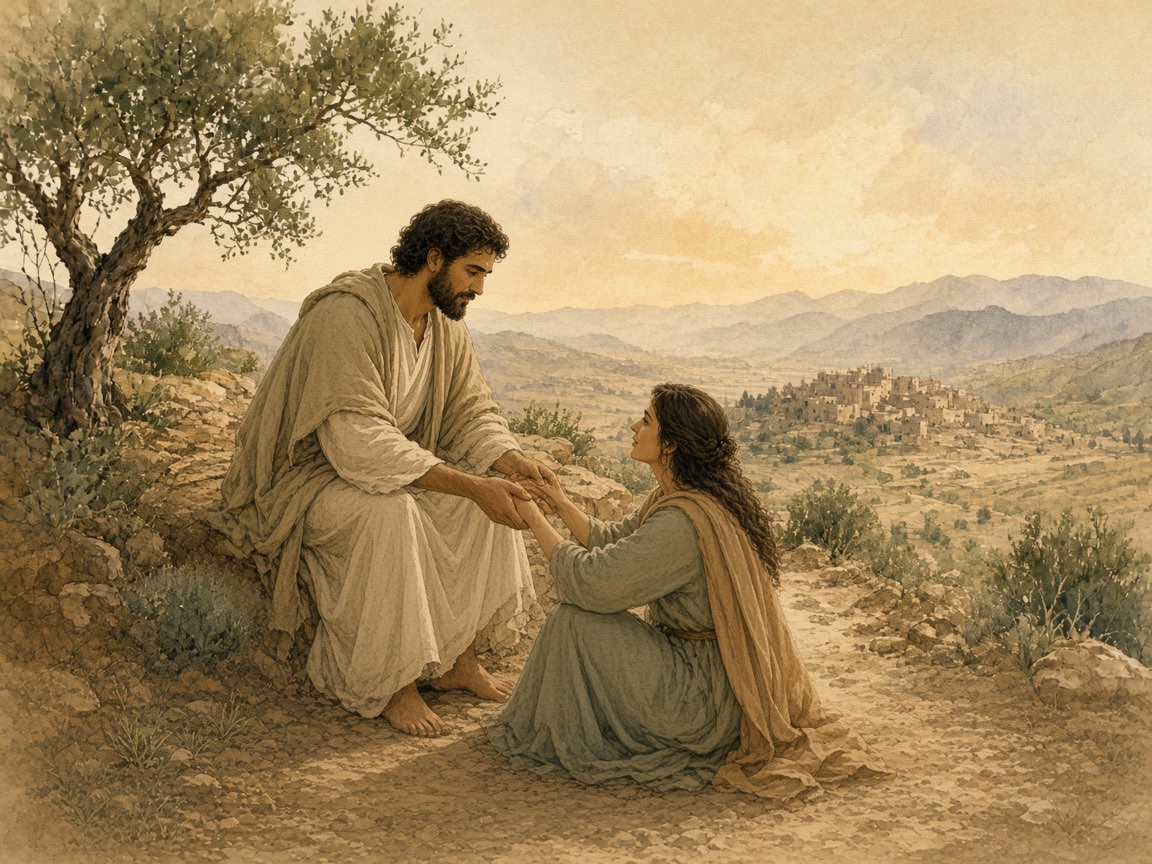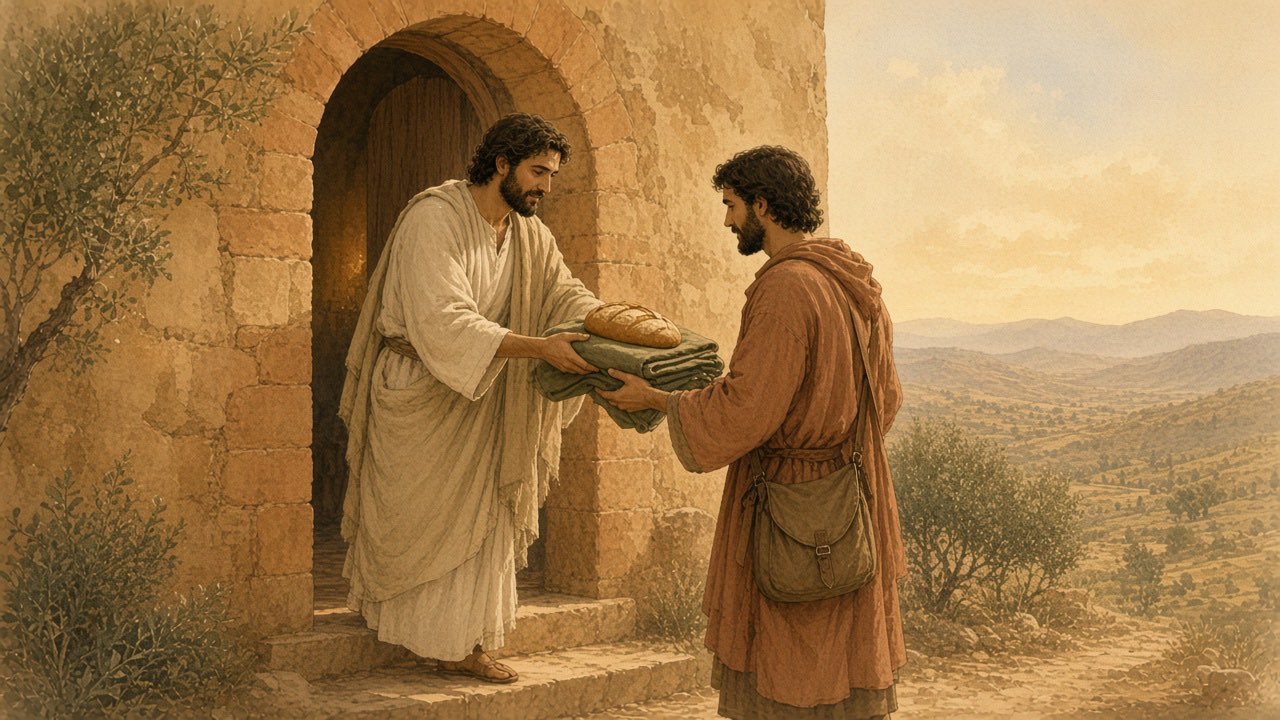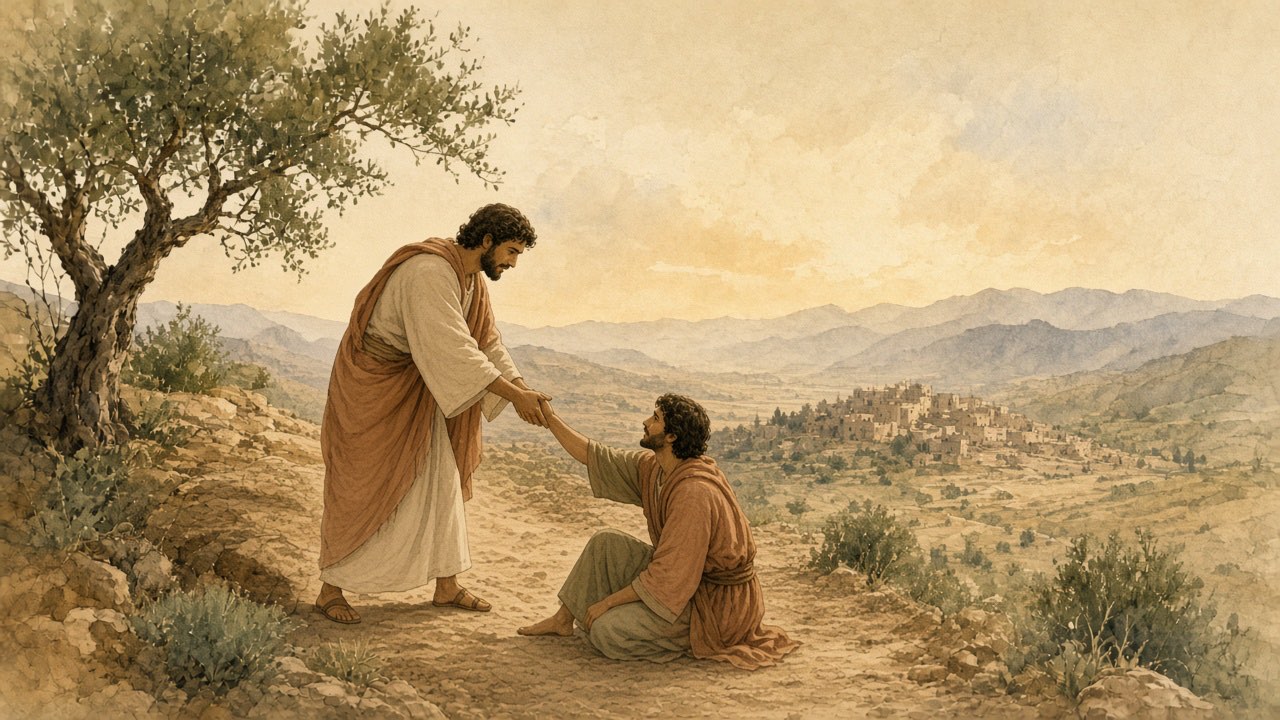
"Blessed are the merciful, for they will be shown mercy."
— Matthew 5:7 (NIV)
Matthew 5:7 is the fifth Beatitude, one of the short "blessed are" sayings that open Jesus' Sermon on the Mount. It ties two things together: the mercy you show and the mercy you receive. This page gives the verse, what the key Greek words mean, where it sits in Matthew 5, and a plain reading. For more on the theme, see Bible verses about mercy and Love and mercy.
Free PDF
Get the free 30 Days of Love Verses PDF
Sign up for the daily Bible verse email, and get the free 30 Days of Love Verses PDF. 30 Days of Love Verses · Open the PDF
The verse
The King James reads: "Blessed are the merciful: for they shall obtain mercy."
"Blessed" is makarios (G3107), happy or fortunate in God's eyes. "Merciful" is eleēmōn (G1655), someone who acts with compassion toward people in need. "Will be shown mercy" or "shall obtain mercy" is eleeō (G1653), to have mercy on or to help someone in trouble. The adjective and the verb come from the same root, so the verse sounds like an echo in Greek.
Where it sits in Matthew 5
The Beatitudes run from Matthew 5:3 to 5:12. Just before this one Jesus says, "Blessed are those who hunger and thirst for righteousness, for they will be filled" (Matthew 5:6). Right after it he says, "Blessed are the pure in heart, for they will see God" (Matthew 5:8), and then, "Blessed are the peacemakers, for they will be called children of God" (Matthew 5:9).
Later in the same sermon Jesus returns to the idea: "For if you forgive other people when they sin against you, your heavenly Father will also forgive you" (Matthew 6:14). Luke records a parallel line: "Be merciful, just as your Father is merciful" (Luke 6:36).
What the verse is saying
Mercy in the Bible is more than a feeling. It is help given to someone who cannot repay you, and it often means letting go of what you could hold against them. Jesus tells a whole parable about a servant who was forgiven a huge debt and then refused to forgive a small one (Matthew 18:21-35). The master's question is the point: "Shouldn't you have had mercy on your fellow servant just as I had on you?" (Matthew 18:33).
The verse does not say you earn God's mercy by being merciful. It says the two belong together. People who have received mercy become merciful, and the merciful will find mercy waiting for them.
Questions people ask
What does Matthew 5:7 say?
In the NIV it says, "Blessed are the merciful, for they will be shown mercy." The KJV says, "Blessed are the merciful: for they shall obtain mercy."
What does "blessed are the merciful" mean?
"Blessed" (makarios) means fortunate in God's eyes. "Merciful" (eleēmōn) describes someone who helps people in need and lets go of grudges. Jesus is saying those people are truly well off, because mercy will come back to them.
Which Beatitude is Matthew 5:7?
It is the fifth Beatitude. It comes after "Blessed are those who hunger and thirst for righteousness" (Matthew 5:6) and before "Blessed are the pure in heart" (Matthew 5:8).
Do we earn God's mercy by being merciful?
The verse links the two but does not describe a trade. Elsewhere Jesus teaches that we have already been shown great mercy (Matthew 18:21-35), and that mercy received should make us merciful to others.
What verses go with Matthew 5:7?
Luke 6:36 (be merciful as your Father is merciful), Micah 6:8 (love mercy), Ephesians 4:32 (be kind and compassionate), and Colossians 3:12 (clothe yourselves with compassion) are close companions.