"Place me like a seal over your heart, like a seal on your arm; for love is as strong as death, its jealousy unyielding as the grave. It burns like blazing fire, like a mighty flame."
— Song of Solomon 8:6 (NIV)
Song of Solomon 8:6 means the beloved asks to be set on her lover as a seal is set: a mark of identity, worn over the heart and on the arm, because this love holds as hard as death holds and will not share him. In the NIV, "Place me like a seal over your heart, like a seal on your arm; for love is as strong as death, its jealousy unyielding as the grave. It burns like blazing fire, like a mighty flame." The King James Version says, "Set me as a seal upon thine heart, as a seal upon thine arm: for love is strong as death; jealousy is cruel as the grave: the coals thereof are coals of fire, which hath a most vehement flame." The line people search, "set me as a seal upon your heart," is that opening request. "Love is as strong as death" is the reason she gives.
The short reference page is Song of Solomon 8:6. The verse is often read at weddings, and it fits a wedding when the two people mean what it says: an exclusive claim, carried in public, that does not let go. It is the woman speaking in the poem, not a formula the ceremony invents. The next verse says many waters cannot quench this love. Bible verses on true love in Song of Solomon 8:6-7 stays with that pair as a portrait of true love. Love and romantic relationships stays with how desire is honored before marriage. Love and marriage stays with the covenant itself. A list of ceremony readings, with this verse among them, is Wedding Bible verses. A list for the years after the wedding, when the seal has held, is Anniversary Bible verses. A list of verses about the marriage that seal is for is Bible verses about marriage. The direct answer is What does the Bible say about marriage. The wider answer, of which this seal is one part, is What does the Bible say about love. This page stays with verse 6.
Free PDF
Get the free 30 Days of Love Verses PDF
Sign up for the daily Bible verse email, and get the free 30 Days of Love Verses PDF. 30 Days of Love Verses · Open the PDF
What "set me as a seal upon your heart" means
The wording in the block above is the NIV. "Place me like a seal" and the KJV's "set me as a seal" translate the same request. "Thine" is older English for "your." The search line "set me as a seal upon your heart" is the King James sentence with that one word brought forward.
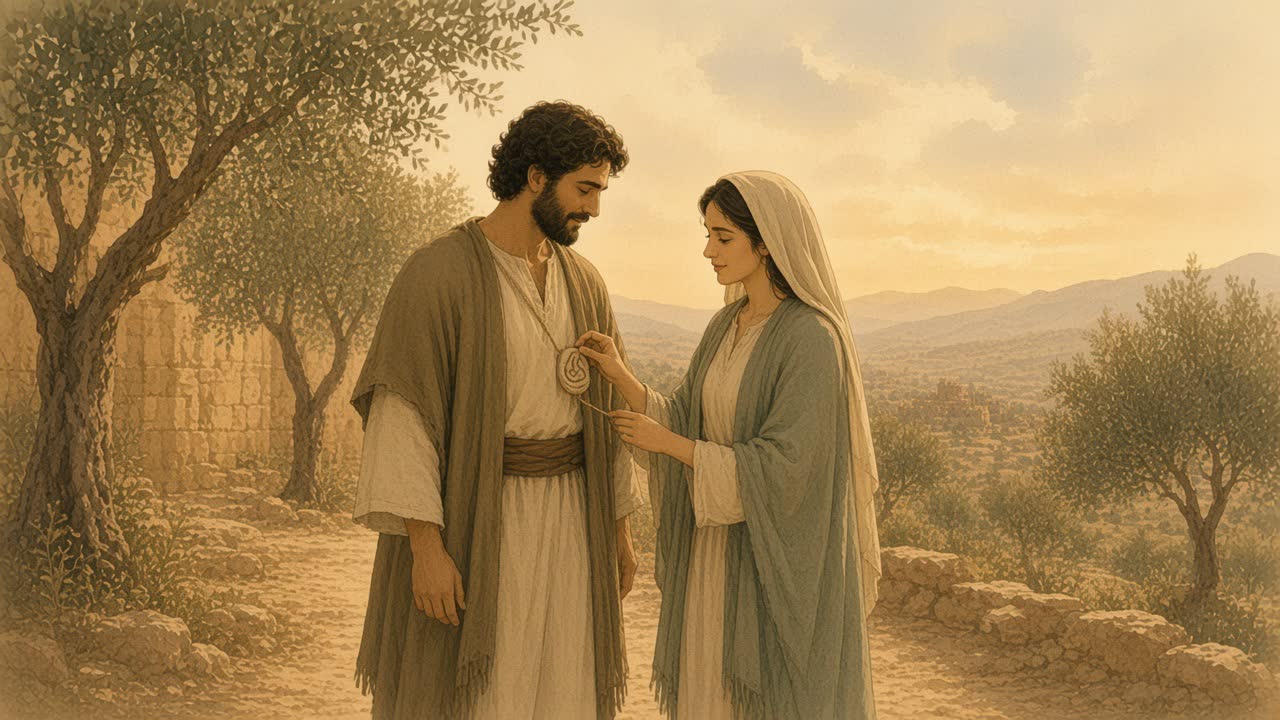
A seal in this world is a signet. The Hebrew is chotam: a small carved stone, pressed into clay so the mark shows who sent a letter or who owns a thing. It is not jewelry for its own sake. It is identity. Genesis 38:18 treats a man's seal, cord, and staff as the things that identify him. Here the woman asks to be that mark.
"Over your heart" and "on your arm" are where a seal was worn. A cord around the neck laid the seal on the chest. A band or a ring kept it on the arm or the hand, where other people could see it when he reached for something. She is asking to be carried in both places: close, where he lives, and visible, where the claim can be seen. The request is mutual belonging of the kind the poem has already said in other words: "I am my beloved's and my beloved is mine" (Song of Solomon 6:3, NIV). Love and marriage is where that exclusive belonging becomes a covenant. Verse 6 is the plea that makes the belonging a seal.
What "love is as strong as death" means
"For" gives the reason. Love is as strong as death. The Hebrew is azzah khamavet: strong, fierce, as death is strong. Death is the power that does not negotiate. It takes, and it keeps. The woman is not saying love is gloomy, and she is not saying a feeling will outlast a funeral by mood alone. She is saying this love has that kind of strength. It is not a preference that steps aside when something harder arrives.
The King James drops the "as" in one place and keeps the comparison: "love is strong as death." The NIV says "as strong as death." Both are the same claim. People choose the line at weddings because they want a love that will still be there when ease is gone. The verse supports that hope. It does not say a ceremony produces the strength. It says the love she is asking him to wear is already that strong, which is why it can be a seal and not a decoration.
The next sentence keeps the same picture. "Many waters cannot quench love; rivers cannot sweep it away" (Song of Solomon 8:7, NIV). Death's strength and flood's strength are the two powers that usually end things. This love is not ended by either. Song of Solomon 8:6-7 on true love stays with both verses together. This page stays with the seal and the death-strong love that explains it.
What "jealousy unyielding as the grave" means
"Its jealousy unyielding as the grave" is the NIV. The KJV says, "jealousy is cruel as the grave." The Hebrew is qin'ah, and then qashah kish'ol: hard, severe, unyielding, as Sheol. Sheol is the grave, the place of the dead. The grave does not share what it has taken, and it does not give the dead back because someone asked nicely. "Unyielding" and "cruel" are that hardness. They describe the grip, not a license to be cruel to a person.
Jealousy in this verse is not the envy that 1 Corinthians 13 says love refuses. That envy resents someone else's good. Qin'ah here is exclusive passion: the love that will not pass the beloved around. A seal is already that claim. You do not stamp two names with one signet and pretend both own the thing. The grave's refusal to share is the picture of a love that is faithful to one person.
Read at a wedding, the line is a vow of exclusivity. It is not permission to control, isolate, or punish a spouse and call the punishment jealousy. Unyielding, in the verse, is love's refusal to let go of the one it has sealed. It is not a mood that monitors and harms. Love and romantic relationships already sets this desire inside a boundary: love is not awakened before its time, and the fire belongs to one covenant. Love and intimacy is the closeness that covenant is for. Verse 6 is the claim that makes the closeness exclusive.
The last clause is fire. "It burns like blazing fire, like a mighty flame." The Hebrew ends with shalhebetyah, "flame" joined to Yah, the short name of the LORD. The NIV says "a mighty flame." The KJV says "a most vehement flame." The word can be heard as the flame of the LORD: not only a hot feeling, but a fire that has God's name in it. That is why the poem can talk about love with the same seriousness it uses for death and the grave. The flame is not a crush. It is the love the seal is asking to carry.
Why people read it at weddings
Couples choose Song of Solomon 8:6 because it sounds like the promise they are making. Set me on your heart. Do not treat this love as something death can outbid. Do not share it. Let it burn and keep burning.
That use is fair to the verse when both people mean the seal. The speaker is the woman in a marriage poem, asking to be the signet on his chest and his arm. A wedding reading puts that request in the room where two people are about to wear one claim in public. It is a good reading for that moment.
It is a poor reading if the couple wants a soft line about feelings and skips the seal. The verse is possessive in the old, faithful sense: one heart, one arm, one beloved. It is also a poor reading if "jealousy" is turned into suspicion. The grave is unyielding because it keeps faith with the dead. The love in this verse keeps faith with the living person it has marked.
What the verse does not mean
A few limits keep the wedding line from being used as a slogan it is not.
- The seal is not ownership of a person's will. A signet marks identity and belonging. It does not license a husband or a wife to erase the other. "Over your heart" is intimacy and loyalty. It is not surveillance. If jealousy in a house looks like control, isolation, or harm, that is not qin'ah in this verse.
- "As strong as death" is not a funeral verse pasted onto a romance. Death is the comparison for strength. The poem is about the living beloved. Love matches death's grip. It does not say the point of the verse is grief, and it does not say love fails to matter once someone has died. The claim is strength.
- "Cruel as the grave" is not cruelty to the beloved. The KJV's "cruel" translates the hardness of Sheol. The NIV's "unyielding" is the clearer sense. The grave does not yield what it holds. Love, in this sentence, does not yield the person it has sealed. Harshness toward a spouse is a different sentence.
- It is not the whole of Song of Solomon 8:6-7. Verse 7, the waters that cannot quench love, belongs with the true-love reading of both verses. Verse 6 is the seal, the strength of death, and the jealousy that will not share.
Read the request before the comparisons. First she asks to be the seal, on the heart and on the arm. Then she says why a seal is the right picture: this love holds like death, refuses to share like the grave, and burns like a flame with the LORD's name in it.
Questions people ask
What does Song of Solomon 8:6 mean?
It means the woman asks to be placed on her beloved like a seal, over his heart and on his arm, because love is as strong as death and its jealousy is as unyielding as the grave. The NIV says "place me like a seal." The King James Version says "set me as a seal upon thine heart." She wants a love that marks him, that does not let go, and that will not be shared. The verse is a claim of exclusive belonging, not a mood.
What does "set me as a seal upon your heart" mean?
It means "make me the signet you wear where you live." A seal, chotam, was a carved stone pressed into clay to show who a person was and what belonged to them. Worn over the heart, it stayed against the body. Worn on the arm, it could be seen. "Upon your heart" is the later English for the King James "upon thine heart." The NIV says "over your heart." The request is to be identity and belonging, not an ornament.
What does "love is as strong as death" mean?
It means this love has the kind of strength death has: it holds, and it is not talked out of holding. The Hebrew is azzah khamavet, strong as death. The line is the reason for the seal. People read it at weddings because they want a love that outlasts ease. The verse is that comparison. It does not say a ceremony creates the strength, and it does not turn the wedding into a funeral.
What does "jealousy as unyielding as the grave" mean?
It means love's exclusive claim does not give the beloved away, any more than the grave gives the dead back. The Hebrew qin'ah is jealousy as zeal, not the envy that resents someone else's good. Qashah kish'ol is "hard as Sheol." The NIV says "unyielding as the grave." The KJV says "cruel as the grave," using "cruel" for that hardness. The line is fidelity. It is not permission to control or harm a spouse and call it love.
Why is Song of Solomon 8:6 read at weddings?
Because it is a request to be worn as a seal: exclusive, close, and public, with a love as strong as death. Couples read it when they mean that claim. The speaker in the poem is the woman, asking this of her beloved. It belongs in a wedding that is ready for a seal, not only for a soft feeling. The next verse, that many waters cannot quench love, is the other half of the same poem.
📚 Explore More
- Song of Solomon 8:6
- What Does the Bible Say About Marriage?
- What Does the Bible Say About Love?
- Bible Verses About Marriage
- Anniversary Bible Verses
- Wedding Bible Verses
- Bible Verses About Love
- Bible Verses on True Love: Song of Solomon 8:6-7
- Love and Romantic Relationships
- Love and Marriage
- Love and Intimacy