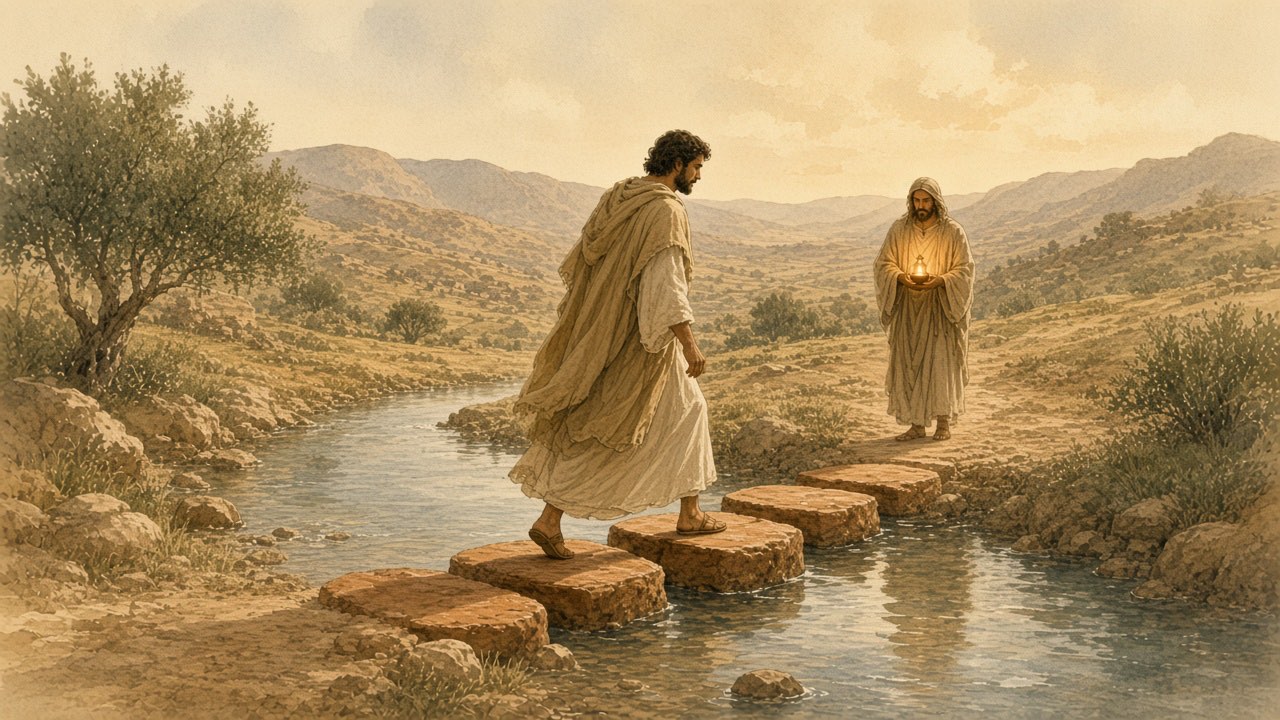

"As far as the east is from the west, so far has he removed our transgressions from us."
— Psalm 103:12 (NIV)
Psalm 103:12 is the "as far as the east is from the west" verse, a picture of how completely God forgives. This page gives the verse, what the key words mean, where it sits in Psalm 103, and a plain reading. For more on the theme, see Bible verses about forgiveness, Bible verses about God's mercy, and Bible verses about repentance.
Free PDF
Get the free 30 Days of Love Verses PDF
Sign up for the daily Bible verse email, and get the free 30 Days of Love Verses PDF. 30 Days of Love Verses · Open the PDF
The verse
The King James reads: "As far as the east is from the west, so far hath he removed our transgressions from us."
"Removed" is rachaq (H7368), to put far away or make distant. "Transgressions" is pesha (H6588), rebellion or a deliberate breaking of trust.
Where it sits in Psalm 103
Psalm 103 is a psalm of David. It begins, "Praise the LORD, my soul, and forget not all his benefits, who forgives all your sins and heals all your diseases" (Psalm 103:2-3).
Verse 8 sets the tone: "The LORD is compassionate and gracious, slow to anger, abounding in love." Verse 10 says, "he does not treat us as our sins deserve or repay us according to our iniquities." Then come three pictures in a row. Verse 11: "For as high as the heavens are above the earth, so great is his love for those who fear him." Verse 12 is the east and the west. Verse 13: "As a father has compassion on his children, so the LORD has compassion on those who fear him."
What the verse is saying
North and south meet at the poles, but you can travel east forever without reaching west. The psalm uses the widest distance a person can picture to say how far God puts sin away from his people.
The verse does not say sin was small. It says God removed it. The reason is in the verses around it: his love (verse 11) and his compassion as a father (verse 13). Other passages use other pictures for the same promise: God will "hurl all our iniquities into the depths of the sea" (Micah 7:19) and "remembers your sins no more" (Isaiah 43:25). For the New Testament side, see 1 John 1:9 and Romans 8:1.
Questions people ask
What does Psalm 103:12 say?
In the NIV it says, "As far as the east is from the west, so far has he removed our transgressions from us." The KJV reads, "As far as the east is from the west, so far hath he removed our transgressions from us."
What does Psalm 103:12 mean?
It means God's forgiveness is complete. He does not keep sins close to bring them back later; he puts them as far away as east is from west. The surrounding verses ground this in his love and compassion, not in how good we are.
Why does Psalm 103:12 say east and west instead of north and south?
The psalm does not explain the choice, but east and west never meet, so the picture is of a distance with no end. It is a way of saying the removal of sin is total.
Who wrote Psalm 103?
The heading calls it "Of David." It is a psalm of praise in which David tells himself to remember all of God's benefits, starting with forgiveness (Psalm 103:2-3).
What other verses are like Psalm 103:12?
Micah 7:19 (sins hurled into the depths of the sea), Isaiah 43:25 (he blots out your transgressions and remembers your sins no more), Hebrews 8:12, and 1 John 1:9 are close companions.