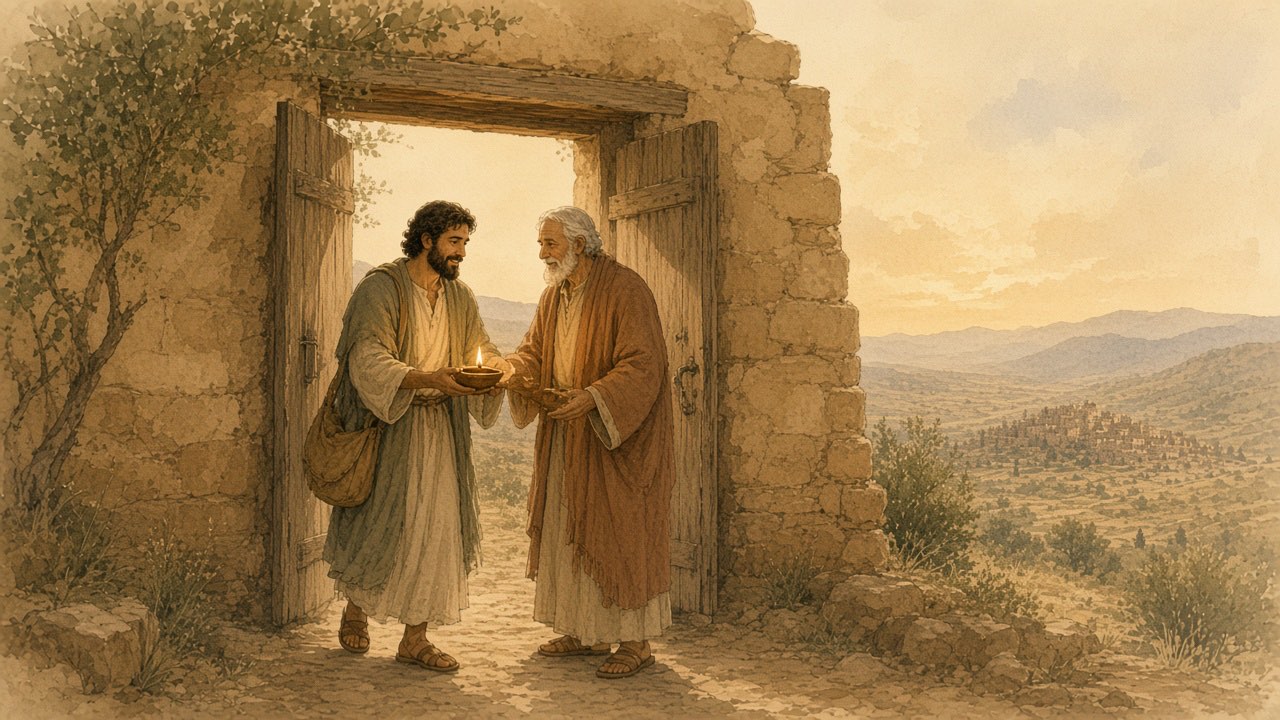

"If we confess our sins, he is faithful and just and will forgive us our sins and purify us from all unrighteousness."
— 1 John 1:9 (NIV)
1 John 1:9 is the "if we confess our sins" verse, one of the most quoted promises of forgiveness in the New Testament. This page gives the verse, what the key words mean, where it sits in 1 John 1, and a plain reading. For more on the theme, see Bible verses about confession, Bible verses about forgiveness, and Bible verses about repentance.
Free PDF
Get the free 30 Days of Love Verses PDF
Sign up for the daily Bible verse email, and get the free 30 Days of Love Verses PDF. 30 Days of Love Verses · Open the PDF
The verse
The King James reads: "If we confess our sins, he is faithful and just to forgive us our sins, and to cleanse us from all unrighteousness."
"Confess" is homologeo (G3670), literally to say the same thing: to agree with God about what the sin is. "Faithful" is pistos (G4103), trustworthy, and "just" is dikaios (G1342), righteous. "Forgive" is aphiemi (G863), to send away or release. "Purify" (KJV "cleanse") is katharizo (G2511), to make clean, and "unrighteousness" is adikia (G93), wrongdoing.
Where it sits in 1 John 1
John has just said that "God is light; in him there is no darkness at all" (1 John 1:5), and that "if we walk in the light, as he is in the light, we have fellowship with one another, and the blood of Jesus, his Son, purifies us from all sin" (1 John 1:7).
Verse 9 sits between two warnings. Verse 8: "If we claim to be without sin, we deceive ourselves and the truth is not in us." Verse 10: "If we claim we have not sinned, we make him out to be a liar and his word is not in us." Then 1 John 2:1 continues: "But if anybody does sin, we have an advocate with the Father, Jesus Christ, the Righteous One."
What the verse is saying
John is writing to believers. Denying sin (verses 8 and 10) keeps people in the dark; naming it honestly before God (verse 9) brings them into the light.
The promise rests on God's character, not on how well someone confesses. He is "faithful," so he keeps his word, and "just," so forgiveness is not God looking the other way: verse 7 has already pointed to the blood of Jesus. God does two things: he forgives the sins and he purifies from all unrighteousness. For the bigger picture, see Romans 8:1 (no condemnation in Christ) and Romans 5:8.
Questions people ask
What does 1 John 1:9 say?
In the NIV it says, "If we confess our sins, he is faithful and just and will forgive us our sins and purify us from all unrighteousness." The KJV reads, "If we confess our sins, he is faithful and just to forgive us our sins, and to cleanse us from all unrighteousness."
What does 1 John 1:9 mean?
It means that when believers honestly admit their sins to God, he can be trusted to forgive them and make them clean. The promise rests on God being faithful and just, and verse 7 grounds it in the blood of Jesus.
What does "confess" mean in 1 John 1:9?
The Greek word is homologeo, literally "to say the same thing." To confess is to agree with God about the sin, naming it honestly rather than denying it, as verses 8 and 10 warn against.
Who was 1 John 1:9 written to?
John writes to believers he calls "my dear children" (1 John 2:1). The verse describes ongoing honesty with God in the Christian life, not only a first step of faith.
What other verses are like 1 John 1:9?
Psalm 32:5 ("I will confess my transgressions to the Lord," and you forgave), Proverbs 28:13 (whoever confesses and renounces their sins finds mercy), and Romans 8:1 are close companions.