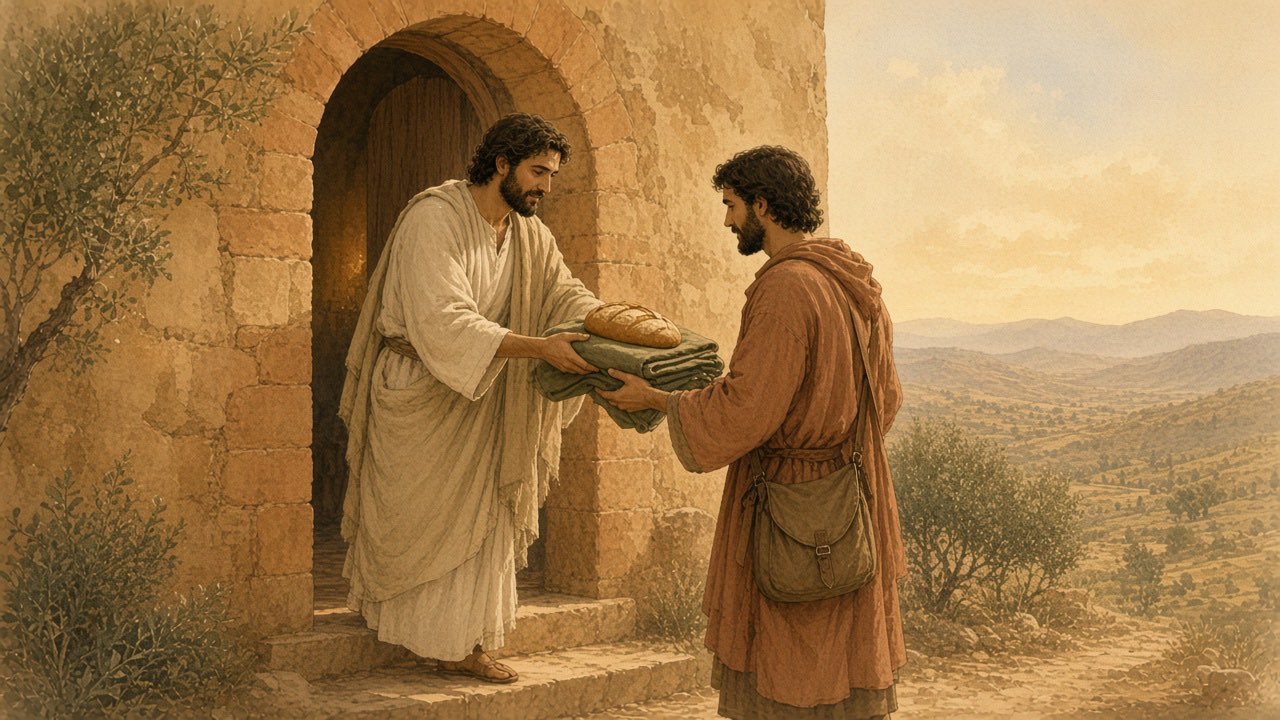

"Do not judge, or you too will be judged. For in the same way you judge others, you will be judged, and with the measure you use, it will be measured to you."
— Matthew 7:1-2 (NIV)
Matthew 7:1 is one of the most quoted lines in the Bible, usually as "judge not." It opens the last chapter of the Sermon on the Mount, and the verses right after it explain what kind of judging Jesus means. This page gives the verses, what the key Greek words mean, the speck-and-plank picture that follows, and a plain reading. For more on the theme, see Bible verses about mercy and Bible verses about the righteous Judge.
Free PDF
Get the free 30 Days of Love Verses PDF
Sign up for the daily Bible verse email, and get the free 30 Days of Love Verses PDF. 30 Days of Love Verses · Open the PDF
The verses
The King James reads: "Judge not, that ye be not judged. For with what judgment ye judge, ye shall be judged: and with what measure ye mete, it shall be measured to you again."
"Judge" is krinō (G2919), to separate, decide, or pass sentence. Here it carries the sense of condemning someone. "Measure" is metron (G3358), the vessel or rule used to measure out grain or goods, and "mete" is metreō (G3354), to measure out.
Where it sits in Matthew 7
Right after verse 2, Jesus gives the picture that explains it: "Why do you look at the speck of sawdust in your brother's eye and pay no attention to the plank in your own eye? ... You hypocrite, first take the plank out of your own eye, and then you will see clearly to remove the speck from your brother's eye" (Matthew 7:3-5).
So Jesus is not saying nobody may ever notice a wrong. He is saying that the person eager to point out someone else's fault, while ignoring their own, is the one he is warning. A few verses later he tells his listeners to "watch out for false prophets" and recognize them "by their fruit" (Matthew 7:15-16), which takes some discernment. Later in the same chapter he sums up the sermon's ethic with Matthew 7:12: "Do to others what you would have them do to you."
Luke records a parallel saying in Luke 6:37, which adds "do not condemn" and "forgive, and you will be forgiven," followed by "Give, and it will be given to you" (Luke 6:38).
What the verses are saying
The warning works like a mirror. Whatever standard you hold over someone else is the standard you are asking to be held to. If you are harsh and quick to condemn, you are choosing harshness for yourself. If you are merciful, you are choosing mercy. James says the same thing: "Mercy triumphs over judgment" (James 2:13).
Jesus elsewhere tells people to "stop judging by mere appearances, but instead judge correctly" (John 7:24). Read together, the point is not that right and wrong don't matter. It is that the final verdict on a person belongs to God, and anyone who speaks into someone else's life should start with their own plank.
Questions people ask
What does Matthew 7:1 say?
In the NIV: "Do not judge, or you too will be judged." The KJV reads: "Judge not, that ye be not judged." Verse 2 continues, "For in the same way you judge others, you will be judged, and with the measure you use, it will be measured to you."
Does "judge not" mean you can never say something is wrong?
No. The verses right after it (Matthew 7:3-5) tell you to remove the plank from your own eye so that you "will see clearly to remove the speck" from someone else's. Jesus is warning against condemning, hypocritical judgment, not against all moral discernment.
Is "judge not lest ye be judged" in the Bible?
That exact wording is a common paraphrase. The KJV says, "Judge not, that ye be not judged" (Matthew 7:1). The meaning is the same: don't condemn others, because you will be measured by the standard you use.
What is the speck and plank in Matthew 7?
It is Jesus's picture in Matthew 7:3-5 of someone trying to remove a speck of sawdust from another person's eye while a plank sits in their own. It shows that self-examination comes before correcting anyone else.
What verses go with Matthew 7:1?
Luke 6:37 (do not judge, do not condemn, forgive), James 2:13 (mercy triumphs over judgment), Luke 6:36 (be merciful, just as your Father is merciful), and Matthew 7:12 (do to others what you would have them do to you) are close companions.