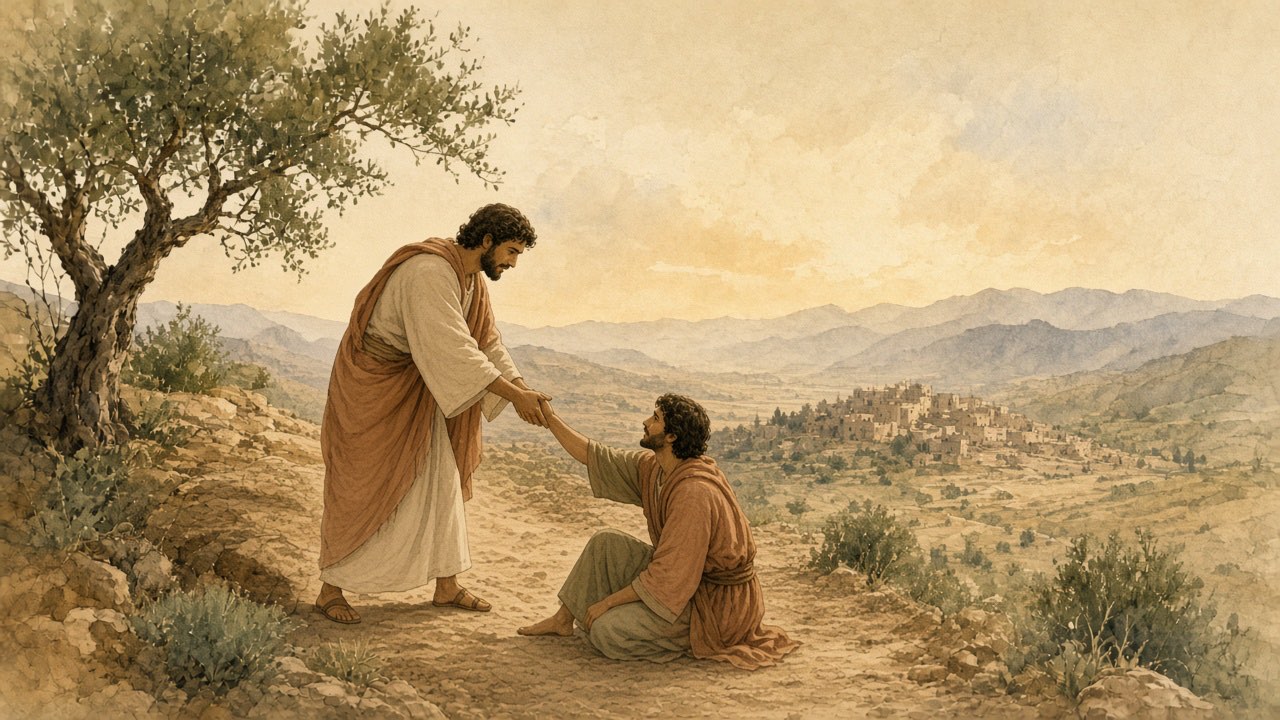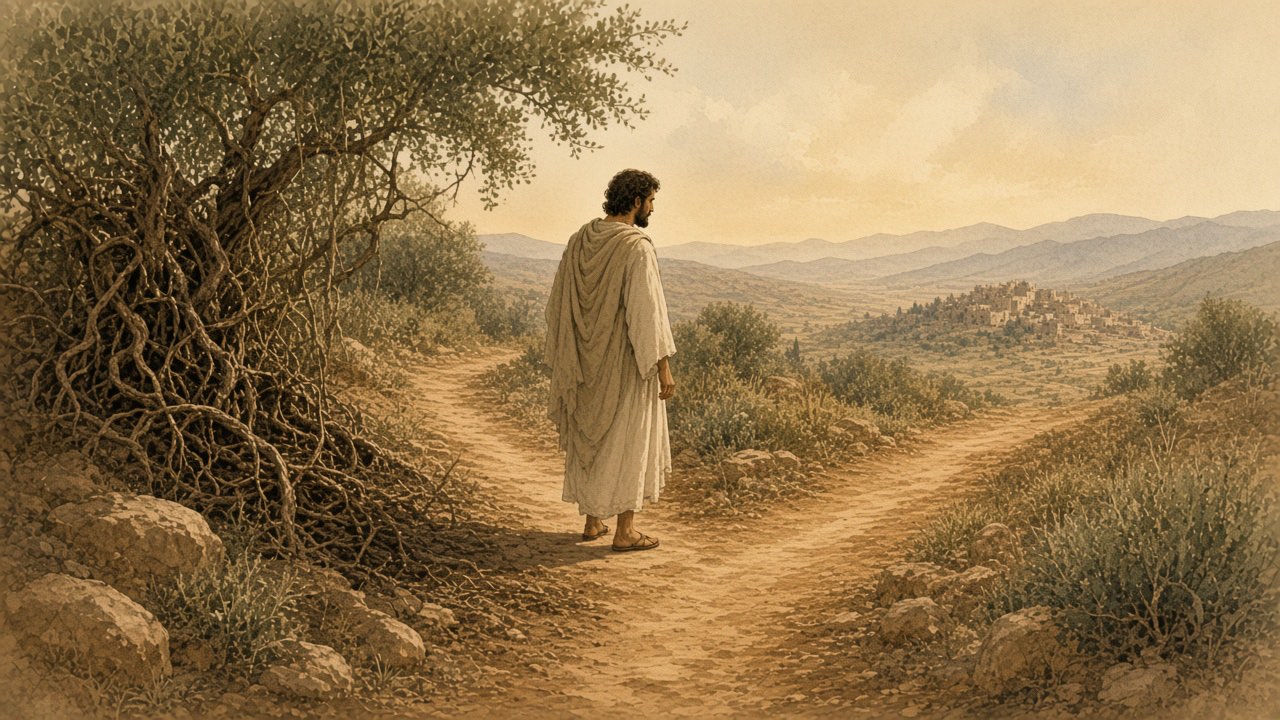
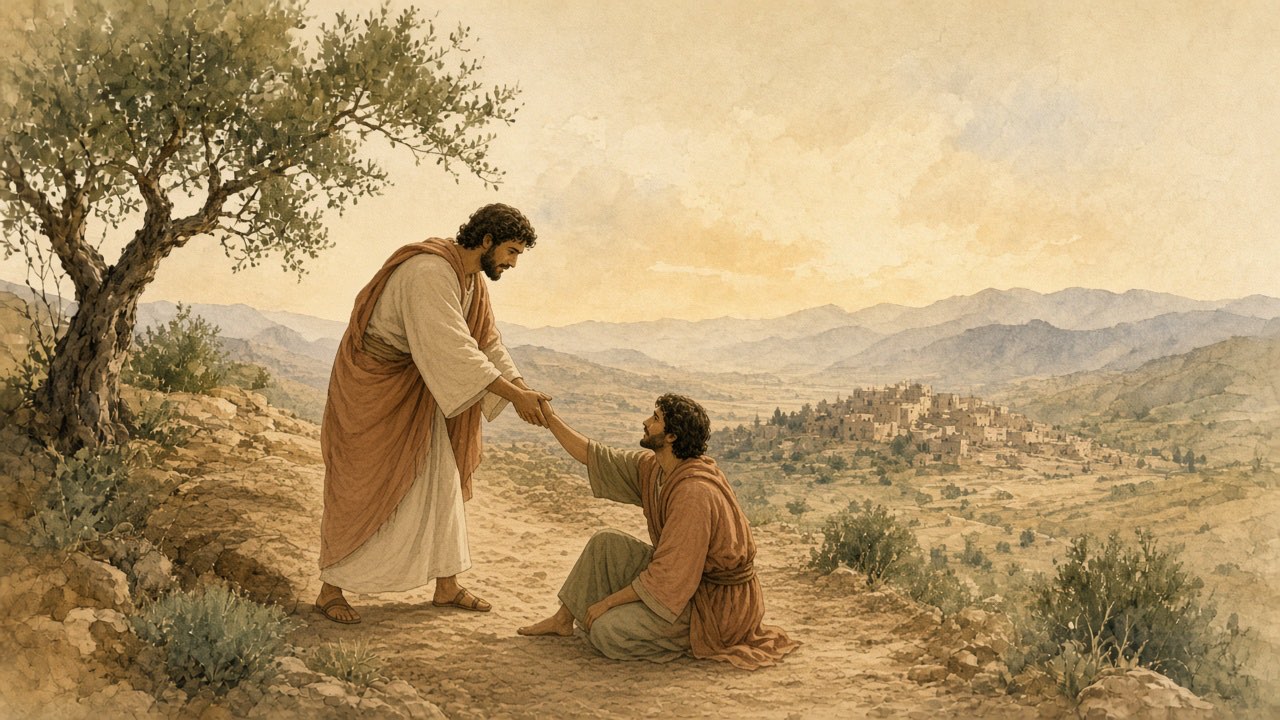
"Because judgment without mercy will be shown to anyone who has not been merciful. Mercy triumphs over judgment."
— James 2:13 (NIV)
James 2:13 ends with four words people remember: "Mercy triumphs over judgment." The first half of the verse is a warning, and the second half is the way out of it. This page gives the verse, what the key Greek words mean, where it sits in James 2, and a plain reading. For more on the theme, see Bible verses about mercy and Love and mercy.
Free PDF
Get the free 30 Days of Love Verses PDF
Sign up for the daily Bible verse email, and get the free 30 Days of Love Verses PDF. 30 Days of Love Verses · Open the PDF
The verse
The King James reads: "For he shall have judgment without mercy, that hath shewed no mercy; and mercy rejoiceth against judgment."
"Judgment" is krisis (G2920), a decision or verdict. "Without mercy" is anileōs (G448), unmerciful, and "mercy" is eleos (G1656), kindness shown to someone in need. "Triumphs" or "rejoiceth against" is katakauchaomai (G2620), to boast over or win out over.
Where it sits in James 2
James 2 opens with a scene in church: a rich man in fine clothes gets the good seat, and a poor man in shabby clothes is told to stand (James 2:1-4). James calls that favoritism and says it breaks the "royal law" found in Scripture, "Love your neighbor as yourself" (James 2:8).
Then he says, "Speak and act as those who are going to be judged by the law that gives freedom" (James 2:12). Verse 13 explains why: the way you treat people now is the measure you will face. It is the same idea as the Beatitude "Blessed are the merciful, for they will be shown mercy" (Matthew 5:7).
What the verse is saying
The first half is a hard sentence. Someone who has shown no mercy, like the people who pushed the poor man aside, should not expect mercy when they are judged.
The second half turns it around. Katakauchaomai is a word for winning and boasting over something. Mercy does not cancel justice, but it has the last word over it. God himself is like this: Micah describes what he asks of people as "to act justly and to love mercy and to walk humbly with your God" (Micah 6:8). People who show mercy are living the way God already treats them.
Questions people ask
What does James 2:13 say?
In the NIV it says, "Because judgment without mercy will be shown to anyone who has not been merciful. Mercy triumphs over judgment." The KJV says, "For he shall have judgment without mercy, that hath shewed no mercy; and mercy rejoiceth against judgment."
What does "mercy triumphs over judgment" mean?
The Greek verb katakauchaomai means to boast over or win out over. Mercy does not ignore wrong, but it has the final word over a harsh, scorekeeping verdict.
What is the context of James 2:13?
It closes James's warning against favoritism in James 2:1-12, where a rich visitor is honored and a poor one is shamed. Verse 13 says the mercy you show others is tied to the mercy you receive.
How does James 2:13 relate to Matthew 5:7?
Both tie the mercy you show to the mercy you get. Jesus says, "Blessed are the merciful, for they will be shown mercy" (Matthew 5:7), and James gives the other side: judgment without mercy for the unmerciful.
What verses go with James 2:13?
Matthew 5:7 (blessed are the merciful), James 2:8 (love your neighbor as yourself), Micah 6:8 (love mercy), and Luke 6:36 (be merciful, just as your Father is merciful) are close companions.