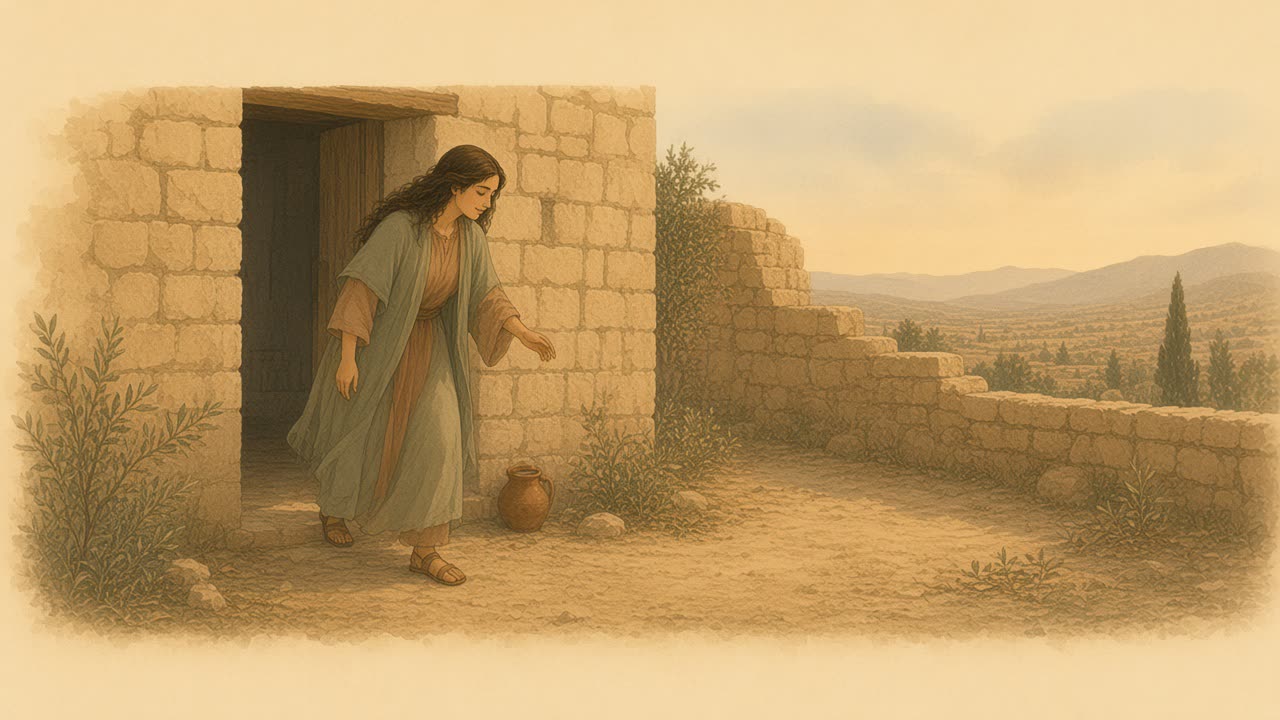
"There is no fear in love. But perfect love drives out fear, because fear has to do with punishment. The one who fears is not made perfect in love."
— 1 John 4:18 (NIV)
1 John 4:18 means the love that has been made complete leaves no room for the fear of punishment. John has just said that this love gives confidence on the day of judgment. The verse then names the fear that confidence replaces. The line people search, "perfect love casts out fear," is this sentence. In the NIV, perfect love "drives out" fear, because fear has to do with punishment, and the person who still lives in that fear has not been made perfect in love.
Love and Fear is the wider study of fear in Scripture, including the fear of the Lord. God is love in 1 John 4:16 stays on that verse. We love because he first loved us stays on verse 19. The verse people look up as perfect love casts out fear is Perfect love casts out fear. The verse itself is 1 John 4:18. This page stays with 4:18 and the paragraph it belongs to.
Free PDF
Get the free 30 Days of Love Verses PDF
Sign up for the daily Bible verse email, and get the free 30 Days of Love Verses PDF. 30 Days of Love Verses · Open the PDF
What the verse is saying
The wording above is the NIV. The ESV says, "There is no fear in love, but perfect love casts out fear. For fear has to do with punishment, and whoever fears has not been perfected in love." "Casts out" and "drives out" translate the same Greek words, exō ballei: love throws that fear outside.
"There is no fear in love" is a claim about this love, not a claim that bravery and love are the same mood. The fear John names is tied to punishment. The Greek word is kolasis. He is not listing heights, storms, or a doctor's report. He is talking about the dread of standing condemned.
"Perfect" is teleia: complete, brought to its end. It belongs to the same family of words John has already used. In 1 John 4:12, "if we love one another, God lives in us and his love is made complete in us." In 1 John 4:17, love is "made complete among us so that we will have confidence on the day of judgment." Verse 18 says that completed love is why the fear of punishment has to go, and then says the one who fears "is not made perfect in love." That last clause is the verb from the same family: this love has not yet been brought to its goal in that person.
So "perfect love" is not a score you reach and then trade for calm. It is love that has finished its work. John has already said where that love comes from. "This is love: not that we loved God, but that he loved us and sent his Son as an atoning sacrifice for our sins" (1 John 4:10). The love that drives out fear is that love, received and then lived, not a feeling you manufacture until the fear leaves.
Where this sits in 1 John 4
1 John 4:18 is one sentence inside 1 John 4:7-21. The paragraph is about love that comes from God and shows up between people.
Verse 7 opens the appeal: "Dear friends, let us love one another, for love comes from God." Verse 8 gives the ground: "Whoever does not love does not know God, because God is love." 1 John 4:8 stays with that first sentence. God is love in 1 John 4:16 stays on the claim where John repeats it. The point is the same. Love is not a hobby God has. It is what he is.
Verses 9 and 10 say how that love was shown. "This is how God showed his love among us: He sent his one and only Son into the world that we might live through him." Then John defines love from God's side: not that we loved God, but that he loved us and sent his Son as an atoning sacrifice for our sins. The fear of punishment in verse 18 has this answer a few lines earlier. The sacrifice is why condemnation is not the last word for the person who is in the Son.
Verses 11 and 12 turn that toward one another. "Dear friends, since God so loved us, we also ought to love one another." No one has seen God. If we love one another, God lives in us and his love is made complete in us. The completing of love is not a private mood. It shows up as love for a brother or sister.
Verses 13 through 15 locate the relationship. "This is how we know that we live in him and he in us: He has given us of his Spirit." John says, "And we have seen and testify that the Father has sent his Son to be the Savior of the world." "If anyone acknowledges that Jesus is the Son of God, God lives in them and they in God." The confidence later in the paragraph belongs to people who confess the Son.
Verse 16 is the line to rest on before verse 18: "And so we know and rely on the love God has for us. God is love. Whoever lives in love lives in God, and God in them." Knowing and relying come before the claim about fear. You do not drive out fear by staring at the fear. You rely on the love God has for you.
Verse 17 is the immediate setup. "This is how love is made complete among us so that we will have confidence on the day of judgment: In this world we are like Jesus." The day of judgment is still real. Completed love changes how a person stands on that day: confidence, not dread. Verse 18 explains that confidence. Fear has to do with punishment. Perfect love drives that fear out. The two verses are one thought.
Verse 19 gives the order, and it keeps verse 18 from being read as advice you give yourself: "We love because he first loved us." 1 John 4:19 stays with that sentence. Our love is an answer. It is not the source.
Verses 20 and 21 test the claim. "Whoever claims to love God yet hates a brother or sister is a liar." And the command follows: "Anyone who loves God must also love their brothers and sisters." The love that drives out the fear of punishment is the same love that cannot share a life with hatred of the person in front of you.
What the verse does not mean
A few limits keep the sentence from being used against the people it was written to comfort.
- It is not a verdict on every nervous feeling. John is writing about fear of punishment, in the same breath as the day of judgment. A startle, a wise caution, or a heavy week is not proof that you are outside God's love. Love and Fear stays with fear across Scripture, including the reverent fear of the Lord, which is a different sentence from this one. This page stays with the fear that has to do with punishment.
- It does not say God stops loving you when you are afraid. "Not made perfect in love" describes love that has not finished its work in a person. It is not a switch God flips off. The love you are being called to rely on was already given in the Son (1 John 4:10), and verse 19 says we love because he first loved us. Romans 8:38-39 says the same security from Paul's side: nothing in creation can separate us from the love of God in Christ. John's verse names the fear of punishment. Paul's verse names everything else that still cannot cut the love.
- It is not a claim that your love must become flawless first. Perfect love is love brought to completion, and John has already said God is the one who loves first. Waiting until you feel perfectly loving before you believe you may stand before God reverses verse 19. The portrait of the love we are still growing into is 1 Corinthians 13:4-7: patient, kind, without a ledger. That page is the practice. This page is the fear of punishment being driven out by love that God completes.
- It does not cancel the day of judgment. Verse 17 still names that day. Confidence is not the same as pretending judgment is imaginary. Confidence is what completed love gives to people who are in the Son, because the atoning sacrifice has already been made. The fear that leaves is the fear of punishment, not the truth that God judges.
Read verse 18 after verse 17, and then read verse 19 before you turn it into a test. The order is God's love, confidence on the day of judgment, fear of punishment driven out, and only then "we love because he first loved us."
Questions people ask
What does 1 John 4:18 mean?
It means perfect love drives out the fear of punishment. John says there is no fear in love, because fear has to do with punishment, and the person who still fears in that way has not been made perfect in love. He is writing in the same paragraph as confidence on the day of judgment, "God is love," and "we love because he first loved us."
What does "perfect love casts out fear" mean?
It means love that has been made complete throws out the dread of being punished. "Casts out" is the ESV. The NIV says "drives out." Both translate exō ballei. "Perfect" means complete, the same idea as love "made complete" in 1 John 4:12 and 1 John 4:17. It is not a promise that every ordinary fear disappears the day you believe.
Does 1 John 4:18 mean I should never feel afraid?
No. The fear in the verse is fear of punishment, tied to the day of judgment in the verse before it. Scripture also tells people not to be afraid in danger, and it commands a reverent fear of the Lord. Those are other sentences. Love and Fear follows them. Feeling afraid about a real threat is not the same as living as if God is waiting to condemn you.
Is the perfect love in 1 John 4:18 God's love or mine?
It is God's love brought to completion among his people. John has said God is love, that God loved us first by sending his Son, and that we love because he first loved us. The love is made complete in us as we love one another, but it does not start in us. If the verse is read as "become perfectly loving and then you may stop being afraid," it is being read backwards.
How does 1 John 4:18 fit with God is love and verse 19?
"God is love" in 1 John 4:8 and 1 John 4:16 is why the fear of punishment cannot be the last word about God. Verse 18 says what that completed love does to fear. Verse 19, "We love because he first loved us," keeps the order straight. 1 John 4:16 stays with God's nature. 1 John 4:19 stays with our love as a response. This verse stays with the fear that leaves.