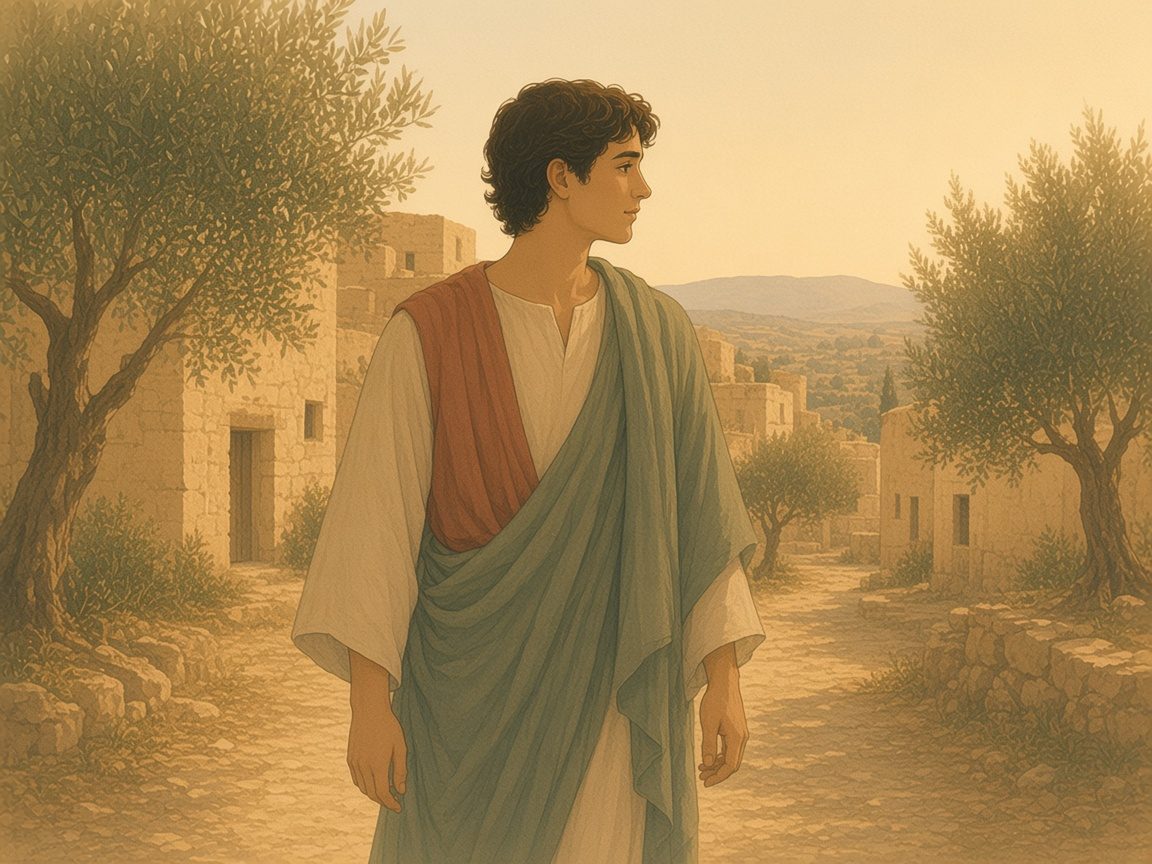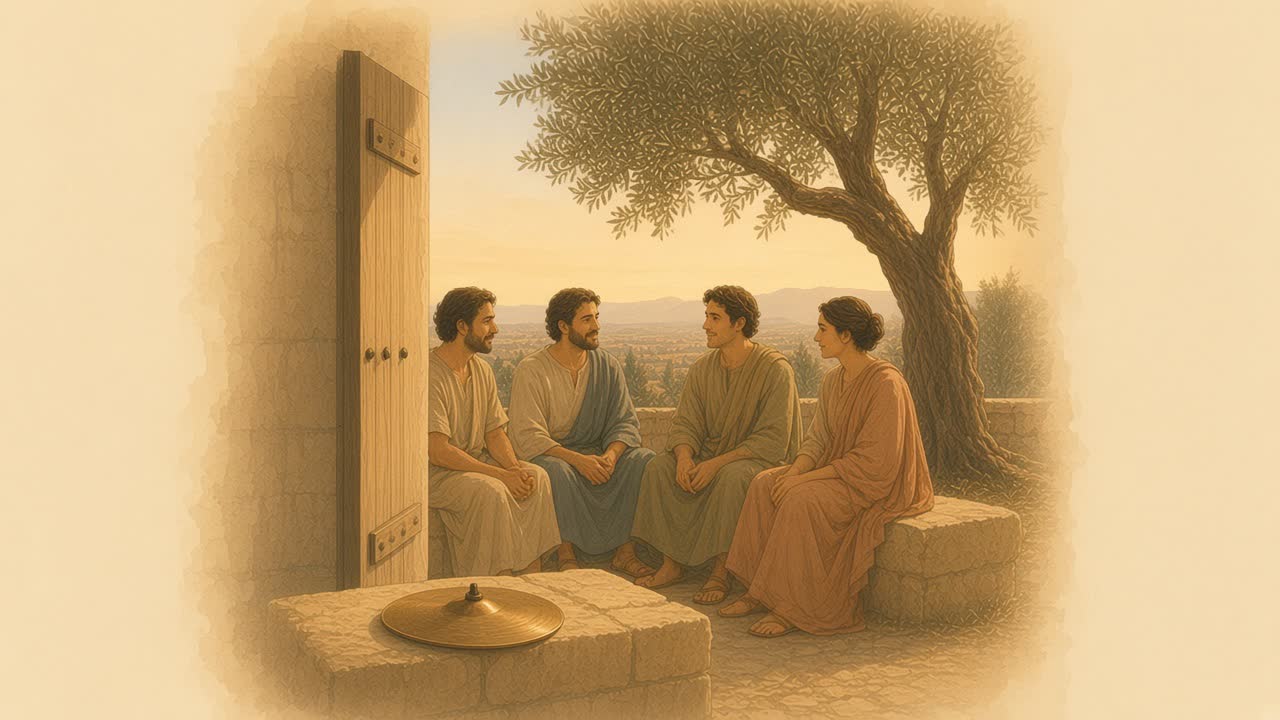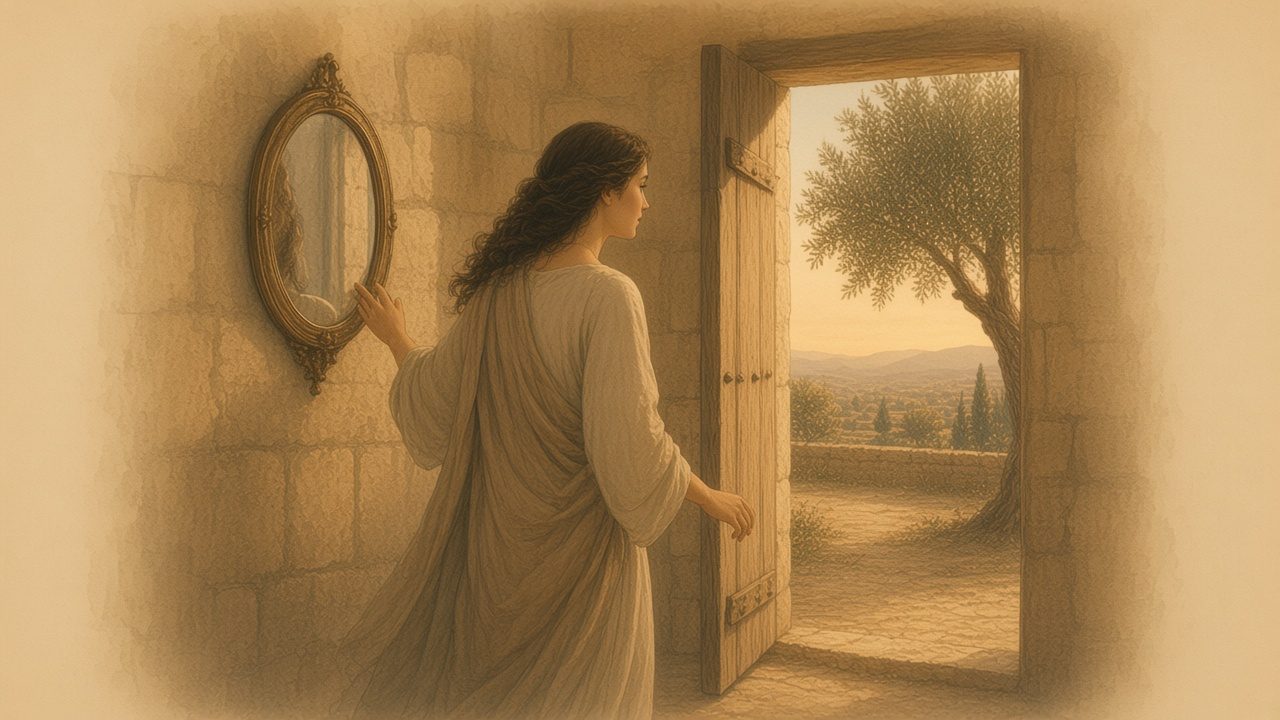
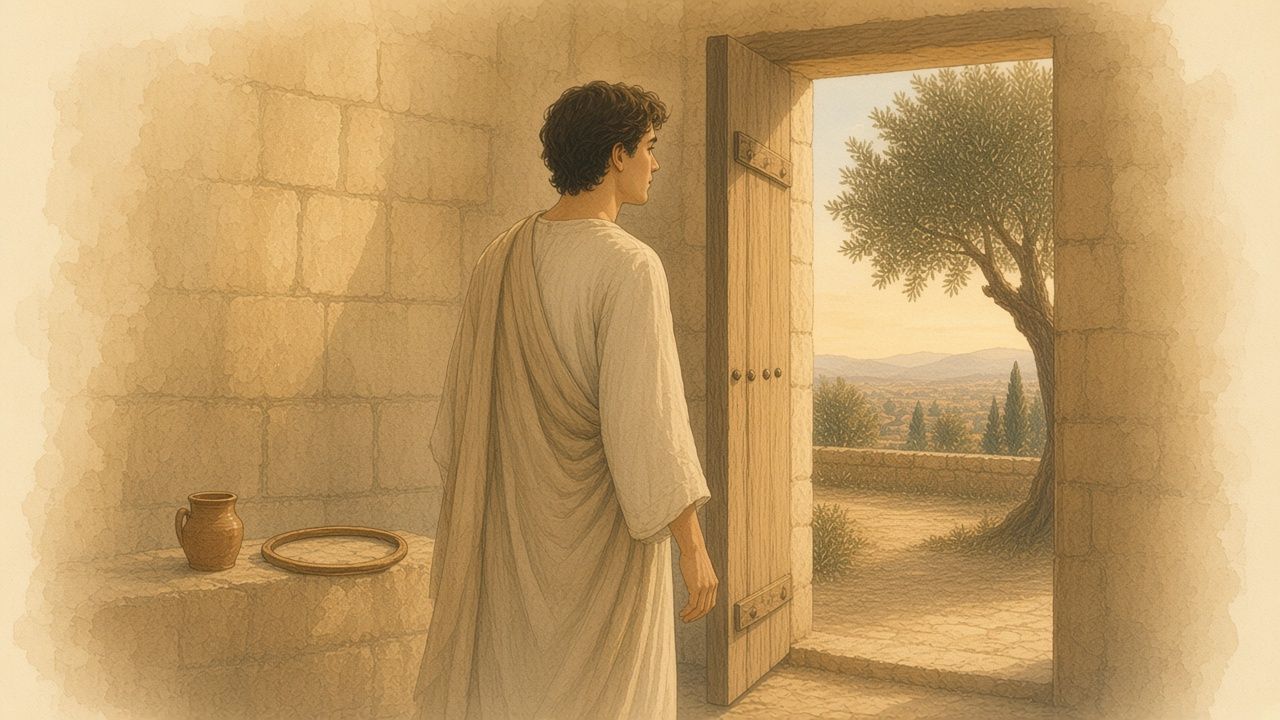
"When I was a child, I talked like a child, I thought like a child, I reasoned like a child. When I became a man, I put the ways of childhood behind me."
— 1 Corinthians 13:11 (NIV)
1 Corinthians 13:11 means that speech, thought, and reasoning which fit a child are set aside once a person has grown up, and Paul is using that ordinary fact as a picture of partial gifts giving way when what is complete arrives. In the NIV, "When I was a child, I talked like a child, I thought like a child, I reasoned like a child. When I became a man, I put the ways of childhood behind me." The lines people search, "when I was a child, I spoke as a child" and "put away childish things," are the King James wording of the same verse: "When I was a child, I spake as a child, I understood as a child, I thought as a child: but when I became a man, I put away childish things." Childhood is not being insulted. It is being outgrown, because a fuller way of knowing has come.
Paul is still inside 1 Corinthians 13:8-13. Verse 8 has said love never fails, while prophecies, tongues, and knowledge pass away. Verses 9-10 have said we know in part and prophesy in part, and when completeness comes, what is in part disappears. Verse 11 is the picture of that disappearance. Verse 12 will say the same change as sight: now a mirror, then face to face. Verse 13 will say faith, hope, and love remain, and the greatest of these is love. The verse is not a talk about acting your age.
1 Corinthians 13 is the whole chapter. 1 Corinthians 13:1 stays with the opening line: tongues without love are a resounding gong or a clanging cymbal. What 1 Corinthians 13:4-7 means stays with patient, kind love. 1 Corinthians 13:7 stays with "love bears all things." 1 Corinthians 13:8 stays with "love never fails" and why the gifts pass away. 1 Corinthians 13:12 stays with the mirror and "through a glass, darkly." The greatest of these is love stays with verse 13. This page stays with verse 11.
Free PDF
Get the free 30 Days of Love Verses PDF
Sign up for the daily Bible verse email, and get the free 30 Days of Love Verses PDF. 30 Days of Love Verses · Open the PDF
What "when I was a child, I spoke as a child" means
The wording in the block above is the NIV. The ESV says, "When I was a child, I spoke like a child, I thought like a child, I reasoned like a child. When I became a man, I gave up childish ways." The KJV says, "When I was a child, I spake as a child, I understood as a child, I thought as a child: but when I became a man, I put away childish things." All three are the same Greek sentence.
The search line "when I was a child, I spoke as a child" joins the KJV's "as a child" with later English "spoke." "Spake" is the older past tense of "speak." The NIV's "talked like a child" and the ESV's "spoke like a child" are that same clause. Paul is not quoting a proverb about manners. He is describing how a child speaks, thinks, and reasons, and then how that way of being is left behind.
The Greek runs in three matching clauses, then a turn. Hote ēmēn nēpios, elaloun hōs nēpios, ephronoun hōs nēpios, elogizomēn hōs nēpios. Nēpios is a child, someone not yet come of age. Elaloun is "I was speaking." Ephronoun is "I was thinking," the mind set in a child's way. Elogizomēn is "I was reasoning," reckoning, working things out. The KJV hears the second verb as "understood" and the third as "thought." The NIV and the ESV hear them as "thought" and "reasoned." The three imperfect verbs are ongoing childhood: this is how I used to speak, think, and reason, the whole time I was a child.
That is not a moral complaint. A child speaks as a child because a child is a child. The speech fits. Paul has just said the church's prophecy and knowledge are "in part" (1 Corinthians 13:9). Verse 11 says partial speech fits the time of what is partial, the way a child's speech fits childhood.
What "put away childish things" means
The turn is hote gegona anēr, katērgēka ta tou nēpiou: "when I became a man, I have put away the things of the child." Gegona is "I have become." Anēr is an adult, someone come of age. The KJV's "put away childish things," the NIV's "put the ways of childhood behind me," and the ESV's "gave up childish ways" are all katērgēka ta tou nēpiou.
Ta tou nēpiou means "the things belonging to the child." It is not a list of toys, and it is not a slur. The things are the speaking, thinking, and reasoning of the three clauses just named. "Childish" in the KJV can sound like an insult. The Greek is not scolding a child for being a child. It names what belongs to that stage, and it says that stage has been set aside.
The verb is the one that ties the picture to the argument. Katērgēka is from katargeō: to render inoperative, to put out of use, to do away with. It is the same verb Paul has already used for the gifts. In verse 8, prophecies "will cease" is katargēthēsontai. In verse 10, "what is in part disappears" is katargēthēsetai. Verse 11 uses that verb in the perfect: I have put those things out of use. Childhood ways are done away with when adulthood comes. Partial prophecy, tongues, and knowledge are done away with when completeness comes. The analogy and the argument are the same word.
"When I became a man" is not a program for self-improvement. It is the moment the picture needs: a before, and an after. Before, the child's way is the right way for a child. After, that way is retired because a different way of being has arrived. 1 Corinthians 13:8 stays with why the gifts are in the before. 1 Corinthians 13:12 stays with the after as face-to-face sight. Verse 11 is the picture that joins them.
Partial and complete, inside the love chapter
Read the verse in the paragraph it belongs to.
"Love never fails. But where there are prophecies, they will cease; where there are tongues, they will be stilled; where there is knowledge, it will pass away" (1 Corinthians 13:8, NIV). Love is not in the list of things that are put away. The gifts are. What 1 Corinthians 13:4-7 means is the love that stays: patient, kind, protecting, trusting, hoping, persevering. Verse 11 does not replace that portrait. It says the gifts people were ranking are the things that belong to a stage.
"For we know in part and we prophesy in part, but when completeness comes, what is in part disappears" (1 Corinthians 13:9-10, NIV). "In part" is ek merous. "Completeness" is to teleion, the complete thing, what has reached its end. Verse 11 illustrates that sentence. The child's speech is partial next to the adult's. It is real knowledge of the world a child lives in. It is not the speech you keep once you have grown up. When the complete arrives, the partial is put out of use.
The next verse says what the complete looks like. "For now we see only a reflection as in a mirror; then we shall see face to face. Now I know in part; then I shall know fully, even as I am fully known" (1 Corinthians 13:12, NIV). The King James line is "through a glass, darkly." Growing up, in verse 11, is a picture of that change of sight. It is not advice to leave behind wonder, or to be embarrassed by a simple faith. Jesus tells people to receive the kingdom of God like a little child (Mark 10:15). Paul is not canceling that. He is talking about partial gifts in the present age, set next to the age of seeing face to face. 1 Corinthians 13:12 stays with the mirror and the face. This verse stays with the growing up that pictures the same change.
Verse 13 then names what is not put away. "And now these three remain: faith, hope and love. But the greatest of these is love" (1 Corinthians 13:13, NIV). The things of the child are retired. Love is not one of them. 1 Corinthians 13:13 stays with that ranking. Maturity, in this chapter, is not a personality project. It is the church living by the love of verses 4-7 while what is partial is still here, and then meeting the day when the partial is no longer needed. The whole argument is in 1 Corinthians 13.
What the verse does not mean
A few limits keep "put away childish things" from being used as a slogan it is not.
- It is not generic advice about acting your age. Paul is not telling you to stop being playful, to outgrow what you loved at twelve, or to treat softness as a failure. The child is a picture of the present age of partial prophecy and partial knowledge. The adult is a picture of what is complete. A verse about gifts and the coming face-to-face sight is not a lecture on emotional maturity in the abstract.
- "Childish" is not a moral insult, and children are not the problem. Ta tou nēpiou means the things that belong to childhood. A child's speech is fitting while the child is a child. The verse does not say children are lesser people, and it does not say the church should despise a simple trust. It says a stage that fits one time does not stay in force when the next time comes. Mark 10:15 still stands beside it.
- It does not say the gifts were fake. The same verb that puts away childhood speech is the verb that says prophecies will cease. Ceasing is not the same as having been worthless. The gifts were real speech for the time of the mirror. They are out of place once seeing is direct, the way a child's reasoning is out of place as the permanent speech of an adult. 1 Corinthians 13:8 stays with that contrast. 1 Corinthians 13:7 stays with the love that bears, trusts, hopes, and endures while that time is still here.
- It is not verse 12, and it is not verse 13. The mirror, the riddle, and knowing fully as we are known are 1 Corinthians 13:12. Why love is the greatest of faith, hope, and love is 1 Corinthians 13:13. Verse 11 is the picture between the partial and the face: when completeness comes, the ways that belonged to the partial are put away.
Read the two halves in the order Paul wrote them. First, the child's speech, thought, and reasoning, which fit the child. Then the adult, who has put those ways out of use. In the chapter, the church's present is the first half: we know in part, and we prophesy in part. The second half waits on completeness, when we see face to face.
Questions people ask
What does 1 Corinthians 13:11 mean?
It means Paul is comparing the present age of partial gifts to childhood, and the coming of what is complete to growing up. A child speaks, thinks, and reasons as a child, and that fits. When the child becomes an adult, those ways are put out of use. In 1 Corinthians 13:8-10, prophecies, tongues, and partial knowledge are the things that pass away when completeness comes. Verse 11 is the picture of that passing. It is not a general lecture about immaturity.
What does "when I was a child, I spoke as a child" mean?
It means the way a child speaks belongs to childhood. The King James Version says, "When I was a child, I spake as a child." "Spake" is the older past tense of "speak," and "spoke as a child" is the same line in later English. The NIV says, "I talked like a child, I thought like a child, I reasoned like a child." The Greek gives three imperfect verbs: I was speaking, I was thinking, I was reasoning, all "as a child." The point is fit, not fault. That kind of speech is right for a child and temporary for an adult.
What does "put away childish things" mean?
It means the things that belong to childhood have been put out of use. The Greek is katērgēka ta tou nēpiou, "I have rendered inoperative the things of the child." The NIV says, "I put the ways of childhood behind me." The ESV says, "I gave up childish ways." The verb katargeō is the same verb verse 8 uses for prophecies that will cease and verse 10 uses for the partial that disappears. "Childish things" are not a scolding. They are the speech, thought, and reasoning that fit one stage and do not remain as the speech of the next.
Is 1 Corinthians 13:11 telling me to grow up and leave childish faith behind?
No. The child in the verse is an analogy for knowing and prophesying in part, not a put-down of children or of simple trust. Jesus says whoever does not receive the kingdom of God like a little child will not enter it (Mark 10:15). Paul is explaining why partial gifts pass away when completeness comes, inside a chapter about love. He is not telling the church to become impressive. The love in verses 4-7 is what the chapter holds up. The gifts are what the chapter says will be put away.
How does 1 Corinthians 13:11 fit with verses 8, 12, and 13?
Verse 8 says love never fails, while prophecies, tongues, and knowledge pass away. Verses 9-10 say that happens because the partial disappears when completeness comes. Verse 11 pictures that with growing up. Verse 12 says the same change as sight: now we see in a mirror, then face to face. Verse 13 says faith, hope, and love remain, and that the greatest of these is love. The things put away are the partial gifts. Love is not put away with them.
📚 Explore More
- Bible Verses About Love
- 1 Corinthians 13: The Love Chapter
- 1 Corinthians 13:1 Meaning: A Resounding Gong or a Clanging Cymbal
- What 1 Corinthians 13:4-7 Means
- 1 Corinthians 13:7 Meaning: Love Bears All Things
- 1 Corinthians 13:8 Meaning: Love Never Fails
- 1 Corinthians 13:12 Meaning: Through a Glass, Darkly
- 1 Corinthians 13:13 Meaning: Faith, Hope and Love