
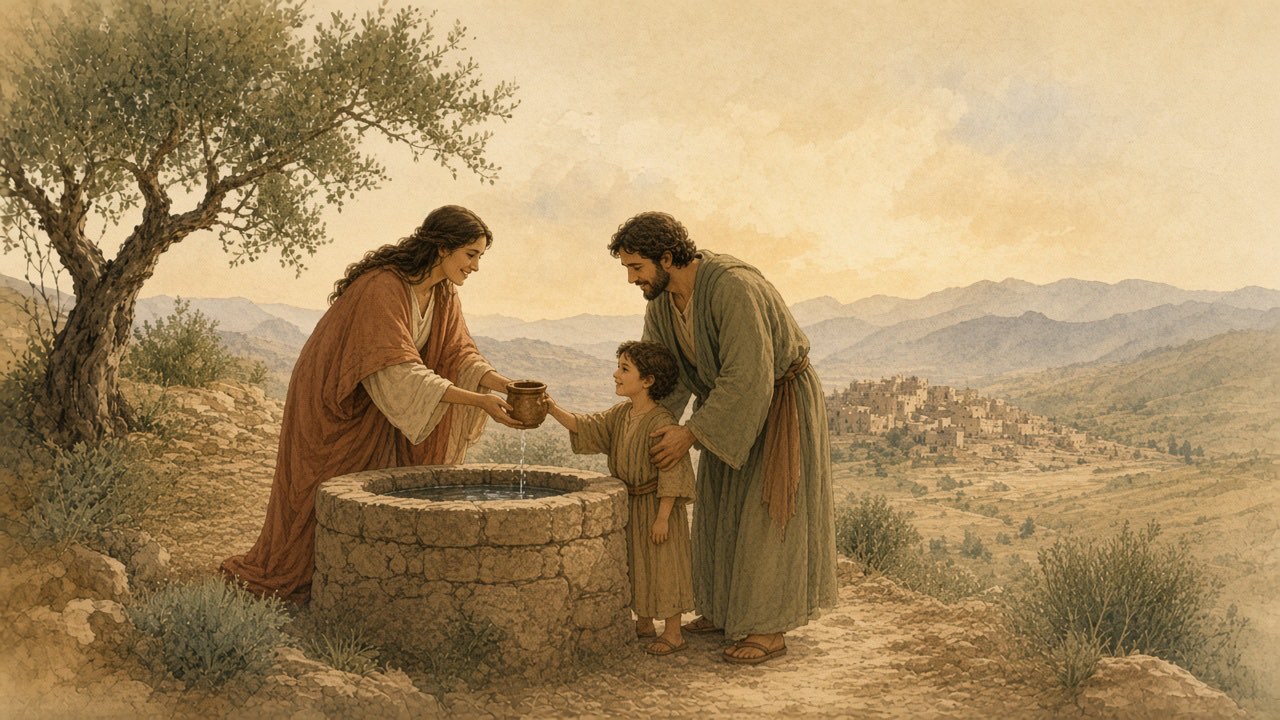
"But love your enemies, do good to them, and lend to them without expecting to get anything back. Then your reward will be great, and you will be children of the Most High, because he is kind to the ungrateful and wicked."
— Luke 6:35 (NIV)
Luke 6:35 is Jesus' summary of enemy-love in the Sermon on the Plain, and it ends with the reason: God Himself is kind to people who do not deserve it. This page gives the verse, what the key words mean, where it sits in Luke 6, and a plain reading. For more on the theme, see Bible verses about loving your enemies, Bible verses about kindness, and Bible verses about generosity.
Free PDF
Get the free 30 Days of Love Verses PDF
Sign up for the daily Bible verse email, and get the free 30 Days of Love Verses PDF. 30 Days of Love Verses · Open the PDF
The verse
The King James reads: "But love ye your enemies, and do good, and lend, hoping for nothing again; and your reward shall be great, and ye shall be the children of the Highest: for he is kind unto the unthankful and to the evil."
"Enemies" is echthros (G2190), someone hostile to you. "Do good" is agathopoieō (G15). "Lend" is daneizō (G1155), and "hoping for nothing again" is apelpizō (G560), to expect nothing back. "Reward" is misthos (G3408), and "Most High" is hypsistos (G5310). "Kind" is chrēstos (G5543), "ungrateful" is acharistos (G884), and "wicked" is ponēros (G4190).
Where it sits in Luke 6
Jesus begins this section with "Love your enemies, do good to those who hate you, bless those who curse you, pray for those who mistreat you" (Luke 6:27-28). He then gives the Golden Rule, "Do to others as you would have them do to you" (Luke 6:31; compare Matthew 7:12).
Just before verse 35 He points out that loving only those who love you is nothing special: "If you love those who love you, what credit is that to you? Even sinners love those who love them" (Luke 6:32). Right after it He sums it up: "Be merciful, just as your Father is merciful" (Luke 6:36).
What the verse is saying
Jesus names three actions, not feelings: love your enemies, do good to them, and lend without counting on getting it back. Each one goes past the normal give-and-take of only helping people who will help you in return.
The reason is God's own character. He is kind to the ungrateful and wicked, so people who act the same way show they are His children. Jesus says the same in Matthew 5:44-45, and Paul puts it into practice in Romans 12:21: "overcome evil with good."
Questions people ask
What does Luke 6:35 say?
In the NIV it says, "But love your enemies, do good to them, and lend to them without expecting to get anything back. Then your reward will be great, and you will be children of the Most High, because he is kind to the ungrateful and wicked."
What does "lend, hoping for nothing again" mean?
It means helping someone with money or goods without making repayment the condition. Jesus is not banning loans; He is telling His followers to give help freely, even to people who may never pay it back.
What is the reward in Luke 6:35?
Jesus says "your reward will be great, and you will be children of the Most High." The reward is from God, not from the person you helped, and it includes being known as God's own children.
How is God kind to the ungrateful and wicked?
He keeps giving good things to people who do not thank Him. Matthew 5:45 describes it the same way: He sends sun and rain on both the righteous and the unrighteous.
What verses go with Luke 6:35?
Luke 6:27-28 (love your enemies, bless those who curse you), Matthew 5:44 (pray for those who persecute you), and Proverbs 25:21-22 (if your enemy is hungry, give him food) are close companions.