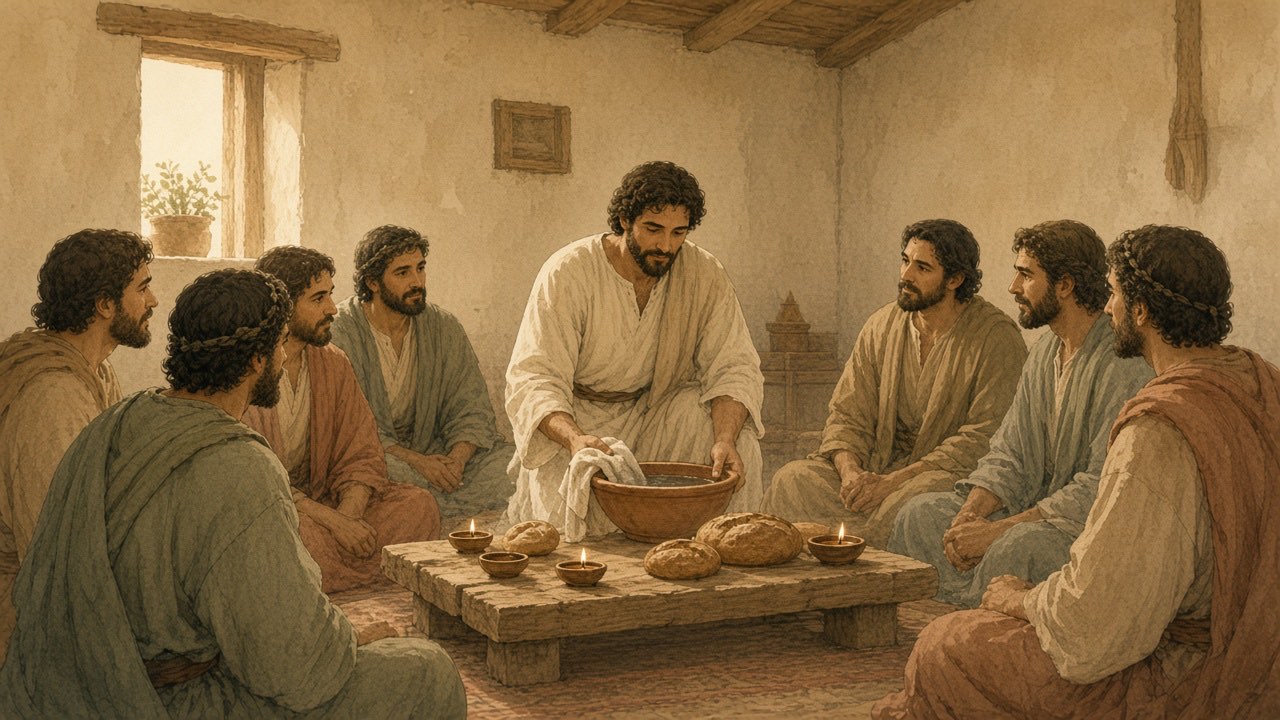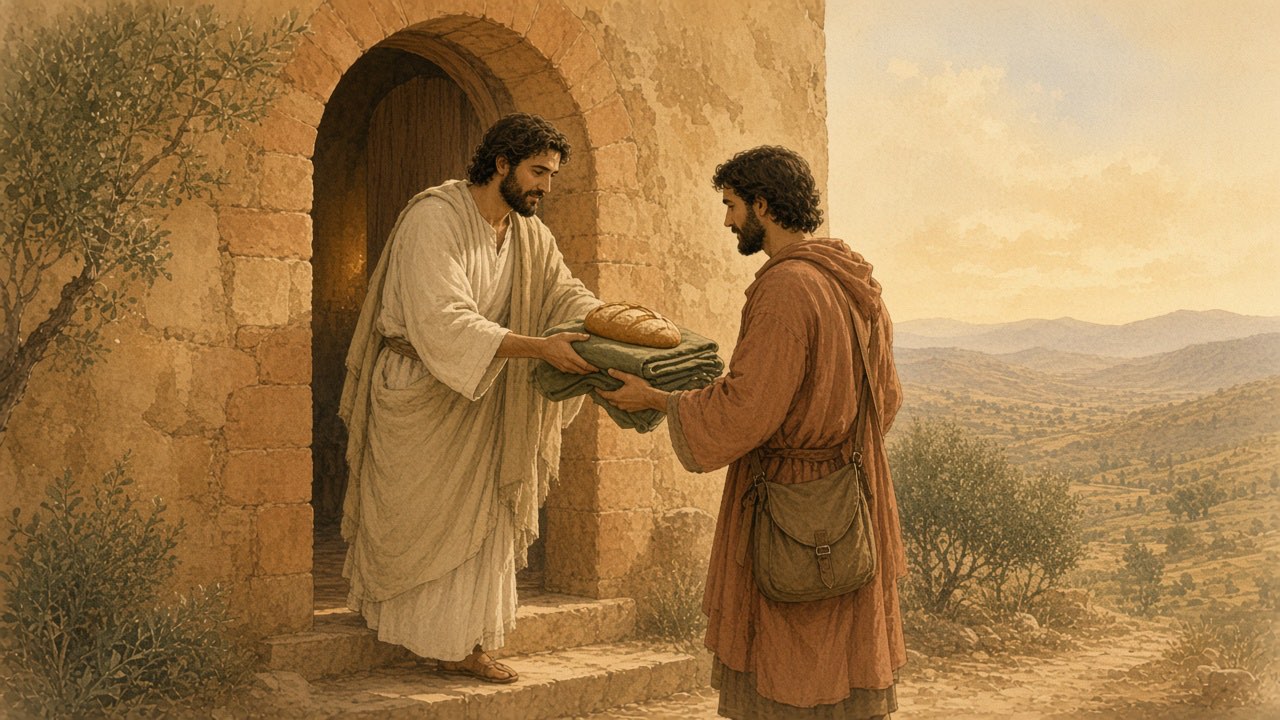
"If your enemy is hungry, give him food to eat; if he is thirsty, give him water to drink. In doing this, you will heap burning coals on his head, and the Lord will reward you."
— Proverbs 25:21-22 (NIV)
Proverbs 25:21-22 is the "if your enemy is hungry, feed him" passage, the proverb Paul later quotes in Romans 12. This page gives the verses, what the key Hebrew words mean, what "heap burning coals on his head" likely means, and a plain reading. For more on the theme, see Bible verses about loving your enemies, Bible verses about enemies, and Love and generosity.
Free PDF
Get the free 30 Days of Love Verses PDF
Sign up for the daily Bible verse email, and get the free 30 Days of Love Verses PDF. 30 Days of Love Verses · Open the PDF
The verses
The King James reads: "If thine enemy be hungry, give him bread to eat; and if he be thirsty, give him water to drink: For thou shalt heap coals of fire upon his head, and the LORD shall reward thee."
"Enemy" is sane' (H8130), literally "one who hates you." "Hungry" is ra'eb (H7457) and "food" ("bread") is lechem (H3899). "Thirsty" is tsame' (H6771) and "water" is mayim (H4325). "Heap" is chathah (H2846), to take up or scoop, and "coals" is gacheleth (H1513), glowing embers. "Reward" is shalam (H7999), to repay or make whole.
Where it sits in Proverbs 25
Proverbs 25 opens, "These are more proverbs of Solomon, compiled by the men of Hezekiah king of Judah" (Proverbs 25:1). The chapter is a collection of short sayings about kings, neighbors, speech, and self-control.
The same book warns against revenge elsewhere: "Do not say, 'I'll pay you back for this wrong!' Wait for the Lord, and he will avenge you" (Proverbs 20:22), and "Do not gloat when your enemy falls" (Proverbs 24:17).
What "heap burning coals on his head" means
The phrase sounds like punishment, but the context points the other way. You are feeding and giving water to the person, and God rewards you for it. Many readers take the coals as the burning sense of shame or remorse your kindness can stir in an enemy, which may lead them to change. Others connect it to an ancient custom of carrying coals as a sign of repentance. Either way, the point is not to hurt them, but to answer hostility with real help.
Paul quotes these verses directly in Romans 12:20 and then adds his summary: "Do not be overcome by evil, but overcome evil with good" (Romans 12:21).
What the verses are saying
The proverb takes "love your enemy" down to the most basic needs, food and water. If someone who hates you is hungry, you feed them. You do not wait for them to apologize first.
Jesus teaches the same path: "Love your enemies, do good to those who hate you" (Luke 6:27-28), and "pray for those who persecute you" (Matthew 5:44). The reward is left to God, not to how the enemy responds.
Questions people ask
What does Proverbs 25:21-22 say?
In the NIV it says, "If your enemy is hungry, give him food to eat; if he is thirsty, give him water to drink. In doing this, you will heap burning coals on his head, and the Lord will reward you."
What does "heap burning coals on his head" mean?
It most likely means your kindness makes the enemy feel the sting of shame for how they treated you, which can lead to a change of heart. It is not a way to get revenge, since the act itself is feeding and caring for them.
Where is Proverbs 25:21-22 quoted in the New Testament?
Paul quotes it in Romans 12:20: "If your enemy is hungry, feed him; if he is thirsty, give him something to drink." He follows it with Romans 12:21, "overcome evil with good."
Does feeding your enemy mean you have to trust them?
No. The proverb is about meeting real needs and refusing revenge. It does not require pretending the harm did not happen or giving someone access that is unsafe.
What verses go with Proverbs 25:21-22?
Romans 12:21 (overcome evil with good), Luke 6:27-28 (do good to those who hate you), and 1 Peter 3:9 (repay evil with blessing) are close companions.