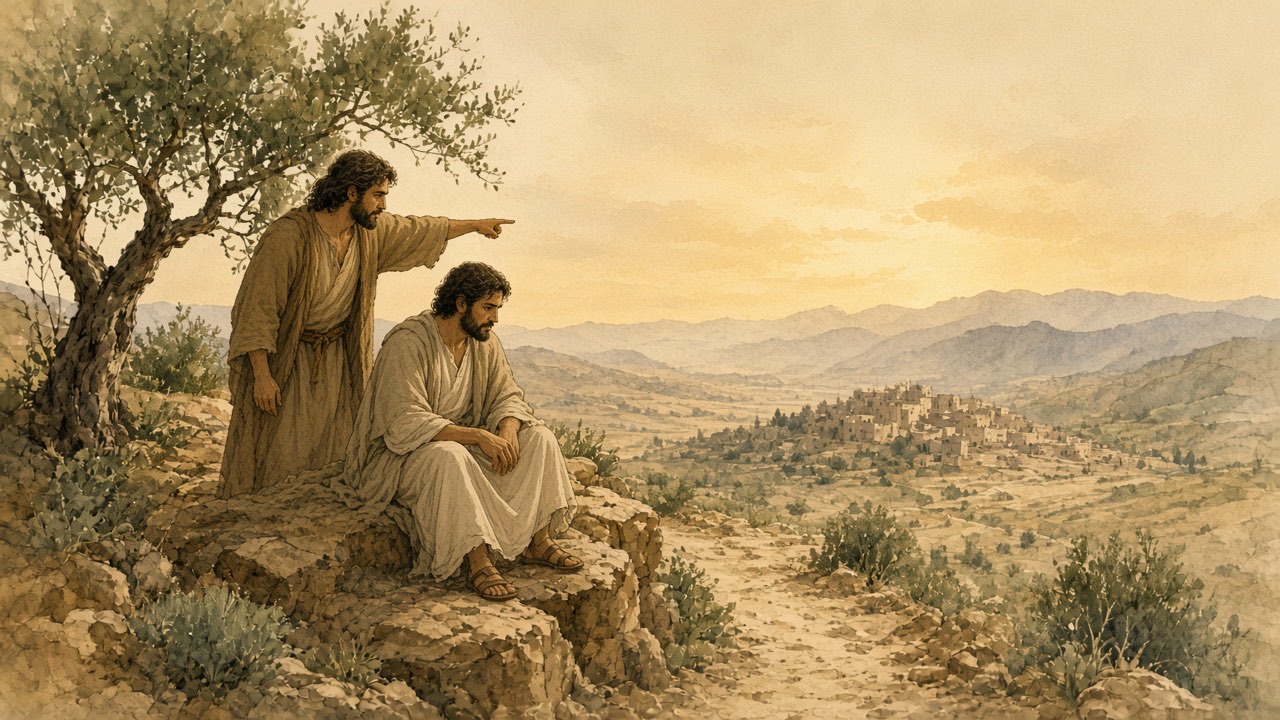
"And let us consider how we may spur one another on toward love and good deeds, not giving up meeting together, as some are in the habit of doing, but encouraging one another—and all the more as you see the Day approaching."
— Hebrews 10:24-25 (NIV)
Hebrews 10:24-25 is the "spur one another on" and "not giving up meeting together" (KJV "not forsaking the assembling of ourselves together") passage, one of the Bible's clearest calls to gather as a church. This page gives the verses, what the key words mean, where they sit in Hebrews 10, and a plain reading. For more on the theme, see Bible verses about the church, Bible verses about encouragement, and 1 Thessalonians 5:11.
Free PDF
Get the free 30 Days of Love Verses PDF
Sign up for the daily Bible verse email, and get the free 30 Days of Love Verses PDF. 30 Days of Love Verses · Open the PDF
The verses
The King James reads: "And let us consider one another to provoke unto love and to good works: Not forsaking the assembling of ourselves together, as the manner of some is; but exhorting one another: and so much the more, as ye see the day approaching."
"Consider" is katanoeo (G2657), to look closely or think carefully about. "Spur on" (KJV "provoke") is paroxysmos (G3948), a sharp stirring up. "Giving up" (KJV "forsaking") is egkataleipo (G1459), to abandon or leave behind. "Meeting together" (KJV "assembling") is episynagoge (G1997), a gathering together. "Encouraging" (KJV "exhorting") is parakaleo (G3870), to call alongside.
Where they sit in Hebrews 10
The passage begins, "since we have confidence to enter the Most Holy Place by the blood of Jesus" (Hebrews 10:19). Three "let us" lines follow. "Let us draw near to God with a sincere heart" (verse 22). "Let us hold unswervingly to the hope we profess, for he who promised is faithful" (verse 23). And "let us consider how we may spur one another on" (verse 24).
So meeting together and encouraging one another come right after drawing near to God and holding on to hope. Verse 26 then begins a serious warning against deliberately turning away.
What the verses are saying
"Consider" asks for real thought about other people: how to stir them toward love and good deeds. It is a deliberate, practical kind of care.
The writer names a habit some had already fallen into, skipping the gathering, and calls readers not to follow it. Gathering is where encouragement happens, and the reason grows stronger "as you see the Day approaching," the day of Christ's return. Paul gives a similar call: "encourage one another and build each other up" (1 Thessalonians 5:11), and "Carry each other's burdens" (Galatians 6:2).
Questions people ask
What does Hebrews 10:24-25 say?
In the NIV it says, "And let us consider how we may spur one another on toward love and good deeds, not giving up meeting together, as some are in the habit of doing, but encouraging one another—and all the more as you see the Day approaching."
What does "not forsaking the assembling of ourselves together" mean?
It is the KJV wording of verse 25. The Greek episynagoge means a gathering together, and the verse warns against abandoning the regular meeting of believers.
What does "spur one another on" mean?
The Greek word paroxysmos means a sharp stirring up. Here it is used in a good sense: deliberately stirring each other toward love and good deeds.
What is "the Day" in Hebrews 10:25?
It refers to the day of Christ's return. The writer says the nearer that day is, the more believers should keep meeting and encouraging one another.
What verses go with Hebrews 10:24-25?
1 Thessalonians 5:11 (build each other up), Galatians 6:2 (carry each other's burdens), and John 13:34-35 (love one another) are close companions.