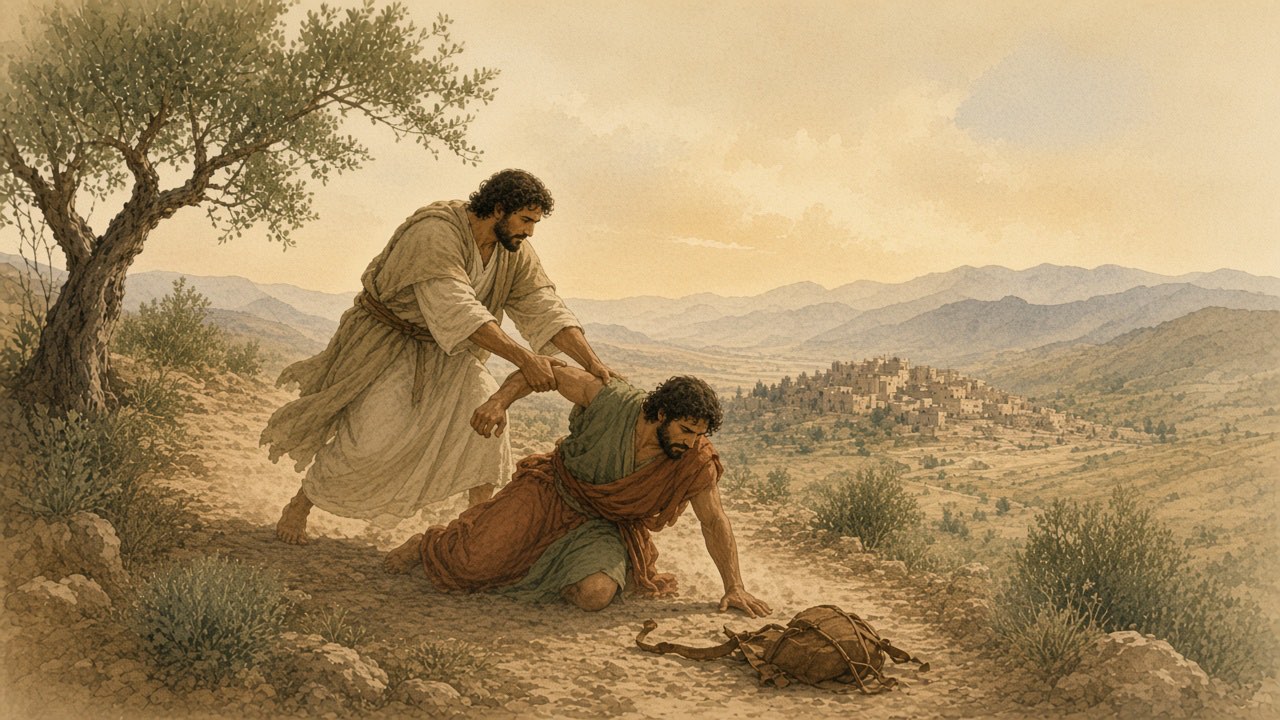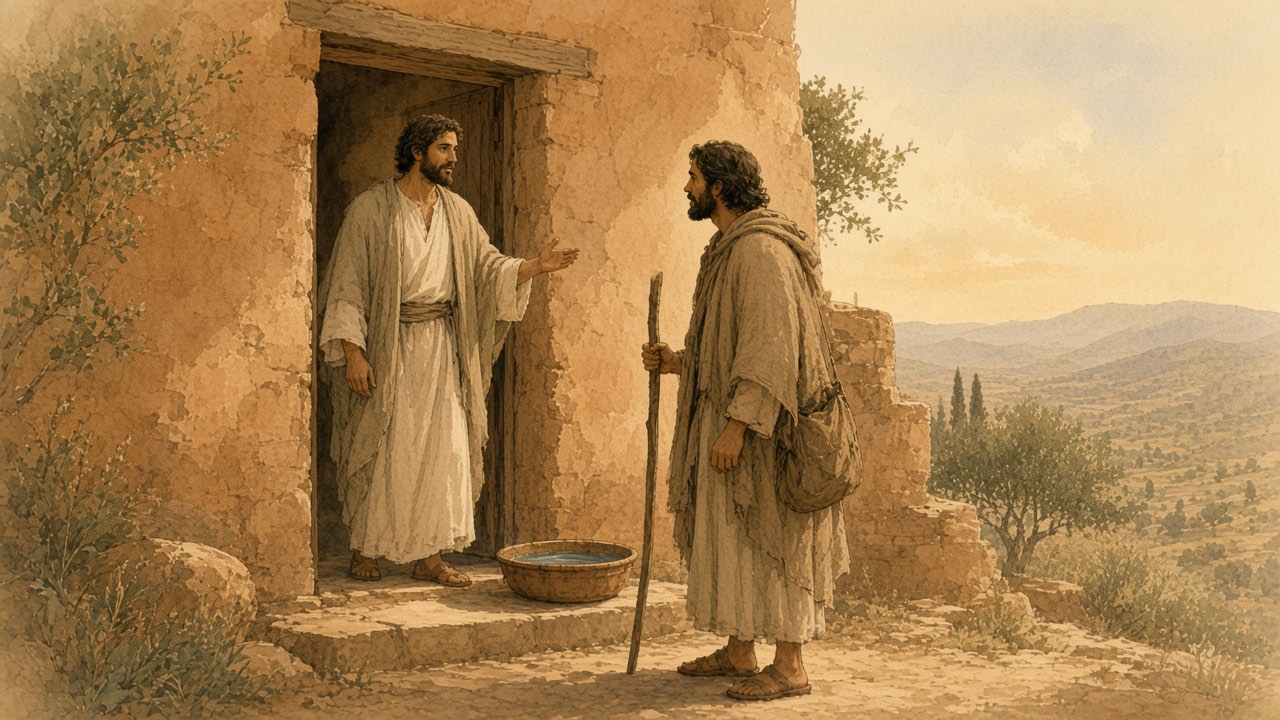

"Be completely humble and gentle; be patient, bearing with one another in love."
— Ephesians 4:2 (NIV)
Ephesians 4:2 describes what a life "worthy of the calling" looks like among other people: humble, gentle, patient, and putting up with one another in love. This page gives the verse, what the key Greek words mean, where it sits in Ephesians 4, and a plain reading. For more on the theme, see Bible verses about patience, Bible verses about humility, and Love and unity.
Free PDF
Get the free 30 Days of Love Verses PDF
Sign up for the daily Bible verse email, and get the free 30 Days of Love Verses PDF. 30 Days of Love Verses · Open the PDF
The verse
The King James reads: "With all lowliness and meekness, with longsuffering, forbearing one another in love."
"Humble" or "lowliness" is tapeinophrosynē (G5012), lowliness of mind. "Gentle" or "meekness" is praotēs (G4236). "Patient" or "longsuffering" is makrothymia (G3115), being slow to anger. "Bearing with" or "forbearing" is anechomai (G430), to hold up under or put up with. "Love" is agapē (G26).
Where it sits in Ephesians 4
The sentence starts in verse 1: "As a prisoner for the Lord, then, I urge you to live a life worthy of the calling you have received" (Ephesians 4:1). "Worthy" is axiōs (G516), and "calling" is klēsis (G2821). Verse 2 is the first answer to what that worthy life looks like.
Verse 3 gives the goal: "Make every effort to keep the unity of the Spirit through the bond of peace" (Ephesians 4:3). "Keep" is tēreō (G5083), "unity" is henotēs (G1775), "bond" is syndesmos (G4886), and "peace" is eirēnē (G1515). Then come the reasons: "There is one body and one Spirit... one Lord, one faith, one baptism; one God and Father of all" (Ephesians 4:4-6).
What the verse is saying
Paul does not start with doctrine fights or church structure. He starts with temperament: be humble, be gentle, be patient. Those three are what keep people together when they disagree or get on each other's nerves.
"Bearing with one another in love" admits that people in the same church will sometimes be hard to live with. Love here does not mean pretending nothing is wrong; it means holding up under each other's faults instead of walking away. The same list appears in Colossians 3:12, and Paul's own definition of love starts the same way: "Love is patient, love is kind" (1 Corinthians 13:4-7).
Questions people ask
What does Ephesians 4:2 say?
In the NIV it says, "Be completely humble and gentle; be patient, bearing with one another in love." The KJV says, "With all lowliness and meekness, with longsuffering, forbearing one another in love."
What does "bearing with one another in love" mean?
The Greek word means to hold up under or put up with. It means staying patient with people's weaknesses and annoyances because you love them, rather than giving up on them.
What is the context of Ephesians 4:2?
It continues verse 1, where Paul urges readers to "live a life worthy of the calling you have received." Verse 3 adds the goal: "keep the unity of the Spirit through the bond of peace."
What is the difference between humility and gentleness here?
Humility is a lowly view of yourself, not thinking you are above others. Gentleness (meekness) is how that shows up toward people: strength kept under control, not harsh or forceful.
What verses go with Ephesians 4:2?
Colossians 3:12 (clothe yourselves with humility, gentleness and patience), Colossians 3:13 (bear with each other and forgive), and Ephesians 4:32 (be kind and compassionate) are close companions.