
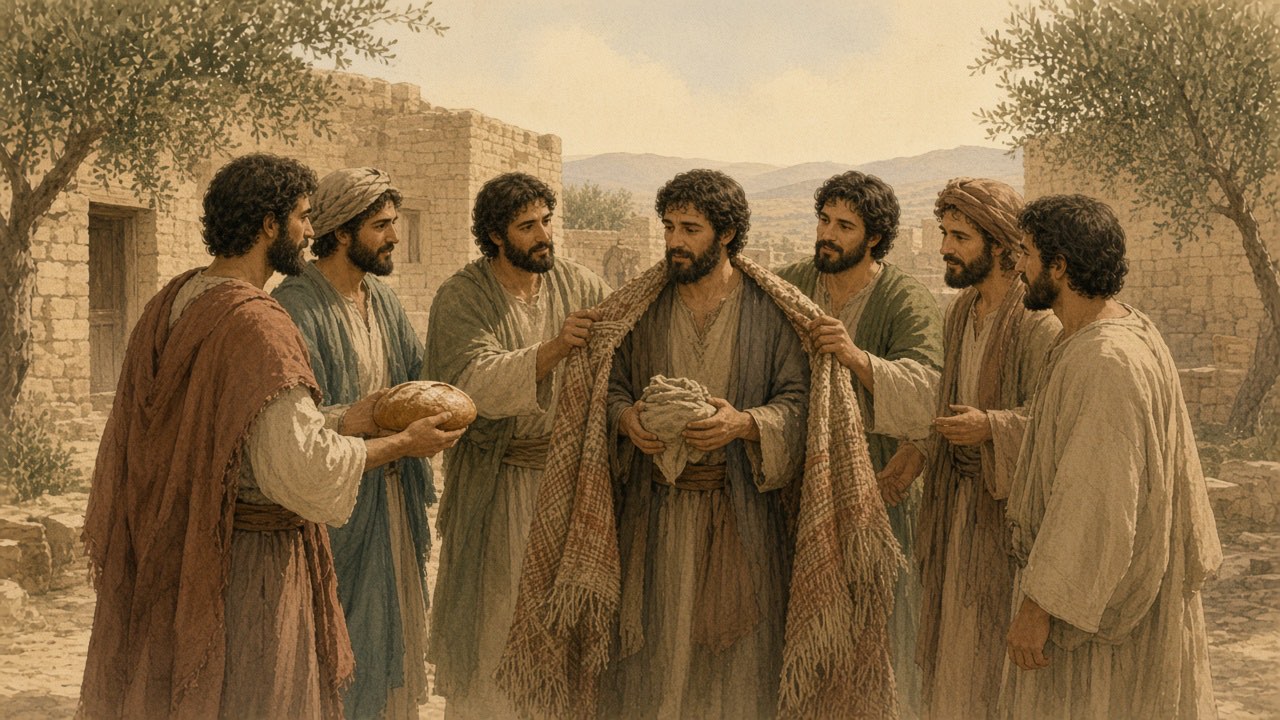
"And over all these virtues put on love, which binds them all together in perfect unity."
— Colossians 3:14 (NIV)
Colossians 3:14 means love is the virtue you put on over the others, and it is what holds them together. In the NIV, "And over all these virtues put on love, which binds them all together in perfect unity." Paul has just named compassion, kindness, humility, gentleness, patience, forbearance, and forgiveness. Verse 14 does not add love as one more item on that list. It says love goes over all of them, and that love is the bond.
The King James wording of the same sentence is, "And above all these things put on charity, which is the bond of perfectness." "Charity" there is agapē, the same word newer translations render "love." "Bond of perfectness" is the phrase behind "perfect unity."
The short answer for the verse is Colossians 3:14 meaning. Love and unity follows the wider call to keep the unity of the Spirit. 1 Corinthians 13 is the chapter that shows what this love does. What 1 Corinthians 13:4-7 means stays with patient, kind love. This page stays with the clothing picture and the bond.
Free PDF
Get the free 30 Days of Love Verses PDF
Sign up for the daily Bible verse email, and get the free 30 Days of Love Verses PDF. 30 Days of Love Verses · Open the PDF
What the verse is saying
The clothing picture starts two verses earlier. "Therefore, as God's chosen people, holy and dearly loved, clothe yourselves with compassion, kindness, humility, gentleness and patience" (Colossians 3:12, NIV). Verse 13 adds the hard part of wearing those clothes in a real church: "Bear with each other and forgive one another if any of you has a grievance against someone. Forgive as the Lord forgave you." Verse 14 is the outer garment. Over all of these, put on love.
"Over all" is epi pasin: on top of all these things, not "love matters and the rest do not." The virtues stay. Love is what you wear over them so they function as one life instead of a pile of traits.
The word for love is agapē. It is a will for someone's good, not a feeling you wait to have. The same word runs through 1 Corinthians 13. There, love is patient and kind, and without it the impressive gifts are nothing. Here, love is what you put on last, because the other virtues come apart without it.
Forgiveness in verse 13 is already part of that clothing. Forgiveness and love in Colossians stays with "forgive as the Lord forgave you." This page is the next sentence: the love that binds that forgiveness to the rest.
Binds everything together in perfect unity
"Which binds them all together in perfect unity" is how the NIV says the clause. The ESV says love "binds everything together in perfect harmony." The KJV says love "is the bond of perfectness." Those are one Greek phrase: syndesmos tēs teleiotētos.
Syndesmos is a bond, the fastening that holds a bundle together. It is not a mood of closeness. It is the thing that keeps separate pieces from falling apart. Teleiotētos is completeness, maturity, perfection. The KJV's "perfectness" is the nearer word. People also search this line as "the bond of perfection." "Perfect unity" and "perfect harmony" say what that completeness looks like when the virtues are actually held: one life, not competing traits.
So the bond of perfection means love is the fastening of a complete Christian character. Compassion without love can turn into pity that keeps its distance. Kindness without love can turn into performance. Humility without love can turn into a display of how low you can talk. Gentleness without love can turn into avoiding people. Patience without love can turn into cold endurance. Paul does not throw those words out. He says put love on over them, because love is what makes them one.
Love and unity quotes this verse for that reason. Unity in a church is not a separate project from these clothes. The bond is love.
What "put on love" asks
"Put on" is the same clothing verb as verse 12. You dress. You do not wait to feel dressed. The people who put it on are "God's chosen people, holy and dearly loved." The command sits on an identity already given. You clothe yourself because you are already loved, not in order to become someone God might notice.
In a house or a congregation, that looks ordinary. It is bearing with the person who is slow, and forgiving the grievance you could keep, and letting compassion, kindness, humility, gentleness, and patience stay on because love is holding them. 1 Corinthians 13:4-7 is the portrait of that love once it is on: patient, kind, not keeping a ledger. The greatest of these is love is Paul saying, at the end of that portrait, which of the things that remain is greatest.
Verse 15 is the next line, not a new topic: "Let the peace of Christ rule in your hearts, since as members of one body you were called to peace" (Colossians 3:15, NIV). The bond in verse 14 is how a body stays one body. Peace rules where love is the outer garment.
What the verse does not mean
- It does not replace the other virtues with a feeling called love. "Over all these" keeps compassion, kindness, humility, gentleness, patience, forbearance, and forgiveness in place. Love binds them. It does not erase them.
- "Charity" in the KJV is not a donation. The KJV's "put on charity" translates agapē. It is the same love, not a fundraising appeal.
- "Perfect unity" is not a demand that a church never disagree. The bond is love holding the virtues together in people who still have grievances, which is why verse 13 is about forgiveness. It is not a rule that every difference is a failure of love.
- It does not tell someone to stay where they are being harmed. Forbearance and forgiveness are for grievances inside the life of the church. They are not a command to remain in ongoing harm. Love protects, which 1 Corinthians 13:4-7 already says in plain words.
Questions people ask
What does Colossians 3:14 mean?
It means love is put on over the other Christian virtues, and love is what binds them together. Paul has told the church to clothe itself with compassion, kindness, humility, gentleness, and patience, and to bear with one another and forgive. Verse 14 says the outer garment is love. In the NIV, that love "binds them all together in perfect unity."
What does "the bond of perfection" mean?
It is the King James sense of the same clause. The KJV says, "put on charity, which is the bond of perfectness." The Greek is syndesmos tēs teleiotētos: a fastening of completeness. Love is the bond that holds the other virtues together so they are one mature life. The NIV says "perfect unity" and the ESV says "perfect harmony" for that same phrase.
What does "put on love" mean in Colossians 3?
It means dress yourself in love, on purpose, over the virtues just named. "Put on" is clothing language, the same verb as "clothe yourselves" in Colossians 3:12. It is a decision to wear love, not a mood you wait to feel. The people told to put it on are already called chosen, holy, and dearly loved.
Which virtues does Colossians 3:14 bind together?
The ones in the two verses before it. Colossians 3:12 names compassion, kindness, humility, gentleness, and patience. Verse 13 adds bearing with each other and forgiving as the Lord forgave you. Verse 14 says "over all these" put on love, which binds them all together. Love is not an extra virtue beside them. It is the bond over them.
How is Colossians 3:14 related to 1 Corinthians 13?
Both passages use agapē, and both refuse to treat love as optional next to other impressive things. 1 Corinthians 13 says gifts and even sacrifice are nothing without love, and then shows love as patient and kind. Colossians 3:14 says the church's virtues come apart unless love is put on over them as the bond. The love chapter is the portrait. This verse is the fastening.