
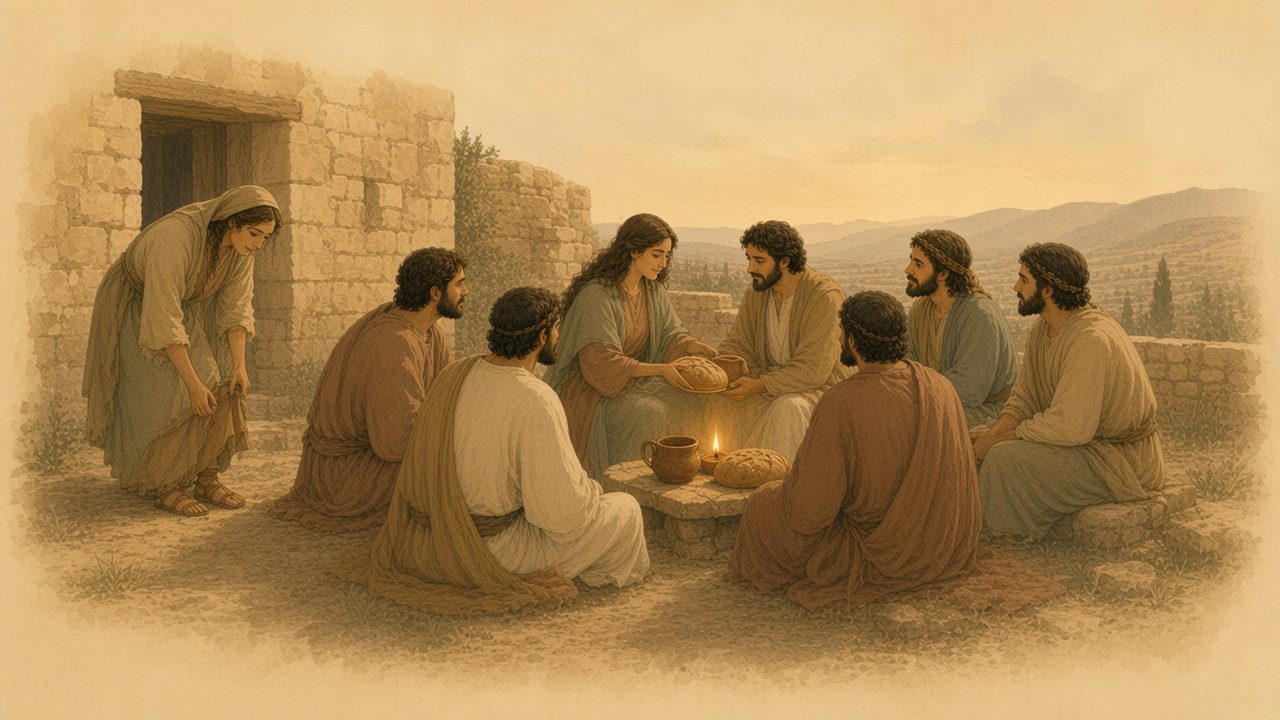
"Above all, love each other deeply, because love covers over a multitude of sins."
— 1 Peter 4:8 (NIV)
1 Peter 4:8 means the church's first duty toward one another is a stretched-out love that does not drag every offense into the open. The familiar line "love covers a multitude of sins" is this verse. In the NIV, love "covers over" a multitude of sins. Peter is telling believers how to live with each other when the end is near, not how God erases guilt.
The next sentence is hospitality without grumbling, which Love and Hospitality takes up on its own. Love and Forgiveness is the wider command to release a debt. Love and Sin is the gospel claim that Christ died for sinners. The short reference page is 1 Peter 4:8. The verse people look up as love covers a multitude of sins is Love covers a multitude of sins. This page stays with Peter's one sentence and the paragraph around it. The Greek word for the love Peter commands is agape love in the Bible.
Free PDF
Get the free 30 Days of Love Verses PDF
Sign up for the daily Bible verse email, and get the free 30 Days of Love Verses PDF. 30 Days of Love Verses · Open the PDF
What the verse is saying
The wording above is the NIV. The ESV says, "Above all, keep loving one another earnestly, since love covers a multitude of sins." That second wording is the phrase people search. Both translations are reading the same Greek line: love one another with an ektenē love, because agapē covers (kalyptei) a multitude of sins.
"Deeply" and "earnestly" translate a word that means stretched out, the way a runner leans forward. Peter is not asking for a warm mood. He is asking for love that keeps reaching when people are difficult. "Above all" puts that love ahead of the other instructions in the paragraph.
"Covers" is the picture in Proverbs 10:12: "Hatred stirs up conflict, but love covers over all wrongs." Hatred finds the fault and spreads it. Love refuses to make a public case out of every failure. James 5:20 uses the same picture when someone turns a wanderer back: that love "will cover over a multitude of sins." Peter is using a line the church already knew. He is not inventing a new way to get right with God.
The present tense matters. Love covers. It is a habit inside the community, not a one-time ceremony. A multitude means Peter is not talking about a single awkward moment. Ordinary life together produces many sins: sharp words, forgotten thanks, uneven work, pride at the table. Fervent love does not keep a pile of them.
Where this sits in 1 Peter 4
1 Peter 4:8 is one line in a short cluster about how believers treat each other at the end of the age.
Verse 7 says, "The end of all things is near. Therefore be alert and of sober mind so that you may pray." The nearness of the end does not send the church into panic or into private piety only. It sends them to clear-headed prayer, and then, "above all," to mutual love. People who think time is short can become harsh with each other. Peter says the opposite: the short time is a reason to love more seriously.
Verse 9 is the next practice: "Offer hospitality to one another without grumbling." Covering sins and opening the door belong together. A shared table falls apart if every guest is still on trial for last month's offense. Love and Hospitality stays with the welcome. This verse is the love that makes the welcome possible.
Verses 10 and 11 turn to gifts. Speak as one who speaks God's words. Serve with the strength God gives. The aim is that God is praised through Jesus Christ. Love and Service follows that charge. The gifts are not a second topic that replaces love. They are how love acts once the room is no longer organized around everyone's faults.
Then the chapter turns to suffering. Verse 12 says not to be surprised at a fiery ordeal. The love in verse 8 is for a church under pressure, not for a calm season when overlooking is easy. When people are afraid, small sins get louder. Peter puts fervent love, including this covering, in front of that test.
What "covers" does not mean
A few limits keep the verse from being used against itself.
- It is not the atonement. Scripture does say that God covers sin: "Blessed is the one whose transgressions are forgiven, whose sins are covered" (Psalm 32:1). That covering is God's, and it comes through Christ. Peter has already said that Christ "bore our sins in his body on the cross" (1 Peter 2:24). 1 Peter 4:8 does not say your love pays for someone's guilt before God. Love and Sin stays with that rescue. Love and Forgiveness stays with releasing a debt because God forgave you. This verse stays with how brothers and sisters treat a multitude of ordinary offenses.
- It is not a cover-up. Covering here is the opposite of hatred that stirs conflict. It is not hiding abuse, lying to protect a wrongdoer, or calling harm "fine" so the room stays quiet. Jesus still tells the church how to go to a brother or sister who sins (Matthew 18:15). Love can name a serious wrong in private and still refuse to gossip it. What 1 Corinthians 13:4-7 means makes the same cut: "always protects" and "keeps no record of wrongs" do not mean concealing ongoing harm.
- It is not indifference. "Covers" does not mean the sin was small to God or that repentance is optional. It means love does not use the sin as fuel. The person may still need to confess, make amends, or be warned. The community does not have to rehearse the failure at every meal.
- It is mutual. "Love each other" is the church's love, turned inward, "among yourselves." It is not a slogan that victims must smother harm so offenders stay comfortable. The love that holds a believer while their own love is unfinished is a different sentence. Romans 8:38-39 says nothing in creation can separate us from the love of God in Christ. 1 Peter 4:8 says our love for one another should cover a multitude of sins. One is God's grip. The other is the church's habit.
1 Corinthians 13 describes that habit from Paul's side: love keeps no record of wrongs and does not delight in evil. Peter's line is the same family. Paul's list is the portrait. Peter's sentence is the command for a church that can see the end coming and still has to share a table.
Read the verse at the moment you want to retell what someone did. Hatred would pass the story on. Love that is stretched out asks whether the story needs to be told, or whether it can be covered so the person, and the church, can go on.
Questions people ask
What does 1 Peter 4:8 mean?
It means believers are to love one another deeply, because that love covers a multitude of sins. Peter puts this "above all" in a paragraph about prayer, hospitality, and using gifts, written to a church that expects the end to be near. The love he means refuses to stir up every offense. It does not mean human love replaces the cross.
What does "love covers a multitude of sins" mean?
It means love does not expose and replay every wrong the way hatred does. Proverbs 10:12 says love covers over all wrongs, and 1 Peter 4:8 applies that to life inside the church. The NIV's "covers over" and the phrase "covers a multitude of sins" translate the same clause. A multitude is the pile of ordinary sins people commit against each other, not a license to hide what is still doing harm.
Does 1 Peter 4:8 mean we should hide sin?
No. Covering is the refusal to weaponize someone's fault. It is not lying, not shielding abuse, and not skipping a needed conversation. Serious sin can still be named, in the way Jesus describes, without being turned into gossip. The verse condemns the love that keeps a public score. It does not bless a cover-up.
Is this the same as God forgiving sin?
No. God forgives and covers sin through Christ. That is the gospel Love and Sin and Love and Forgiveness are about. 1 Peter 4:8 is about the love Christians owe one another. Your patience does not atone for someone. It keeps their failure from becoming the story of the community.
Why does Peter connect this love with the end being near?
Because a church that believes time is short can grow sharp, suspicious, and inhospitable. Peter says the response to the end is prayer, fervent love that covers sins, hospitality without grumbling, and gifts used so God is praised. The verse is practical counsel for pressured people, not a mystical saying about sin disappearing on its own.