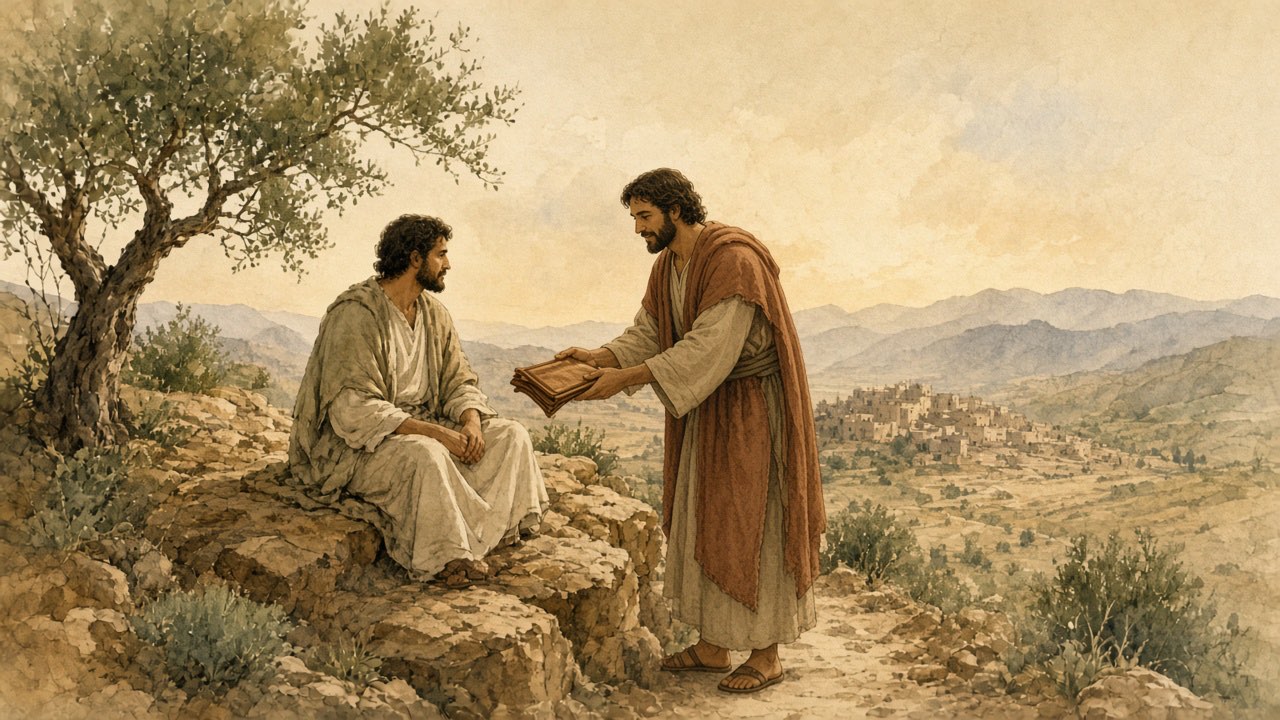

"Therefore I tell you, whatever you ask for in prayer, believe that you have received it, and it will be yours."
— Mark 11:24 (NIV)
Mark 11:24 is one of Jesus's strongest promises about prayer. It comes in a short teaching on faith that starts with a withered fig tree and ends with a call to forgive. This page gives the verse, what the key Greek words mean, where it sits in Mark 11, and a plain reading. For more on the theme, see Bible verses about prayer and Bible verses about faith.
Free PDF
Get the free 30 Days of Love Verses PDF
Sign up for the daily Bible verse email, and get the free 30 Days of Love Verses PDF. 30 Days of Love Verses · Open the PDF
The verse
The King James reads: "Therefore I say unto you, What things soever ye desire, when ye pray, believe that ye receive them, and ye shall have them."
"Ask" or "desire" is aiteō (G154), to ask or request. "Pray" is proseuchomai (G4336). "Believe" is pisteuō (G4100), to trust or put faith in, and "received" is lambanō (G2983), to take or receive.
Where it sits in Mark 11
The day before, Jesus cursed a fig tree. The next morning Peter points out that it has withered, and Jesus answers, "Have faith in God" (Mark 11:22). He goes on: "Truly I tell you, if anyone says to this mountain, 'Go, throw yourself into the sea,' and does not doubt in their heart but believes that what they say will happen, it will be done for them" (Mark 11:23). Verse 24 draws the lesson for prayer.
Then, in the very next breath, Jesus adds a condition: "And when you stand praying, if you hold anything against anyone, forgive them" (Mark 11:25). Faith-filled prayer and a forgiving heart go together.
What the verse is saying
The verse begins with "have faith in God," so the trust it describes is trust in God, not in the strength of your own believing. Jesus is teaching his disciples to pray expecting God to answer, not hedging every request.
The rest of the New Testament reads this promise alongside God's will. John writes, "If we ask anything according to his will, he hears us" (1 John 5:14). Jesus himself prayed in Gethsemane with complete faith and still said, "Yet not what I will, but what you will" (Mark 14:36). Bold asking and surrender to God are not opposites. Elsewhere Jesus says, "Ask and it will be given to you" (Matthew 7:7), and Hebrews says that "anyone who comes to him must believe that he exists and that he rewards those who earnestly seek him" (Hebrews 11:6).
Questions people ask
What does Mark 11:24 say?
In the NIV: "Therefore I tell you, whatever you ask for in prayer, believe that you have received it, and it will be yours." The KJV reads: "What things soever ye desire, when ye pray, believe that ye receive them, and ye shall have them."
Does Mark 11:24 mean God gives anything I ask for?
The verse is a real promise that God hears and answers prayer offered in faith. It begins with "have faith in God" (Mark 11:22), and other passages, such as 1 John 5:14 and Jesus's own prayer in Mark 14:36, show that faith asks in line with God's will. It is not a way to make God do what we want.
What comes right after Mark 11:24?
Mark 11:25: "And when you stand praying, if you hold anything against anyone, forgive them, so that your Father in heaven may forgive you your sins." Jesus ties faith in prayer to forgiving others.
What is the context of Mark 11:22-24?
Jesus had cursed a fig tree, and the next day the disciples saw it withered. He used it to teach them to have faith in God, saying that faith could move a mountain, and then applied it to prayer.
What verses go with Mark 11:24?
Mark 11:25 (forgive when you pray), Matthew 7:7 (ask, seek, knock), Hebrews 11:6 (without faith it is impossible to please God), and Philippians 4:6-7 (present your requests to God) are close companions.