The Biblical Perspective
The command to honor parents stands unique among the Ten Commandments—it's the first command with a promise attached and the bridge between our duties to God and our duties to others. Honoring father and mother isn't merely childhood obedience; it's a lifelong call that shapes our character, blesses our families, and pleases God. Scripture reveals that parental love is meant to mirror God's love for His children, while children's respect and obedience reflect their response to God's authority.
In a culture that often celebrates autonomy over obligation and dismisses biblical parenting as outdated, God's Word offers a countercultural vision. Family values rooted in Scripture don't restrict us—they free us to experience the blessings that flow from honoring the design of our Creator. Whether we're children still under our parents' roof or adults navigating relationships with aging parents, biblical principles guide us toward love that honors both God and family.
Key Scriptural Insights
1. The Fifth Commandment: A Universal and Enduring Call
When God delivered the Ten Commandments at Sinai, He included this instruction: "Honor your father and your mother, so that you may live long in the land the LORD your God is giving you" (Exodus 20:12). This command appears repeatedly throughout Scripture, emphasizing its importance.

The word "honor" (Hebrew: kavod) means to give weight, dignity, and respect. It encompasses:
- Obedience in childhood (Colossians 3:20: "Children, obey your parents in everything, for this pleases the Lord")
- Respect at every age—how we speak to and about our parents
- Care in their later years—providing for their needs
- Gratitude for their sacrifices and investments in our lives
Notice that this command comes with no qualifications about whether parents deserve honor. It doesn't say "honor your father and mother if they're worthy." Even imperfect parents—and all parents are imperfect—deserve respect simply because of the role God assigned them.
Paul reiterates this principle in Ephesians 6:2-3: "'Honor your father and mother'—which is the first commandment with a promise—'so that it may go well with you and that you may enjoy long life on the earth.'" Honoring parents isn't just obedience—it's connected to our flourishing.
2. Parental Love: Reflecting the Heart of God
Scripture consistently uses parental imagery to describe God's love for His people. Understanding how God parents us illuminates how human parents should love their children.
God's love is protective. "He will cover you with his feathers, and under his wings you will find refuge" (Psalm 91:4). Parents provide physical, emotional, and spiritual protection for their children.
God's love disciplines. "The LORD disciplines those he loves, as a father the son he delights in" (Proverbs 3:12). Loving parents correct their children—not out of anger, but for their growth and good.
God's love is patient. "The LORD is compassionate and gracious, slow to anger, abounding in love" (Psalm 103:8). Parents model God's patience when they respond with grace rather than frustration.
God's love provides. "If you, then, though you are evil, know how to give good gifts to your children, how much more will your Father in heaven give good gifts to those who ask him!" (Matthew 7:11). Parents sacrifice to meet their children's needs.
God's love instructs. "Come, my children, listen to me; I will teach you the fear of the LORD" (Psalm 34:11). Parents have the privilege and responsibility of spiritual formation.
When parents love as God loves, they create environments where children flourish and come to understand God's character.
3. Wisdom for Parent-Child Relationships: Proverbs
The book of Proverbs offers concentrated wisdom for both parents and children:
For children:
- "A wise son brings joy to his father, but a foolish son brings grief to his mother" (Proverbs 10:1)
- "Listen to your father, who gave you life, and do not despise your mother when she is old" (Proverbs 23:22)
- "The eye that mocks a father, that scorns an aged mother, will be pecked out by the ravens of the valley" (Proverbs 30:17)
These proverbs emphasize that our treatment of parents has lasting consequences—for them and for us.
For parents:
- "Start children off on the way they should go, and even when they are old they will not turn from it" (Proverbs 22:6)
- "Discipline your children, for in that there is hope; do not be a willing party to their death" (Proverbs 19:18)
- "Fathers, do not embitter your children, or they will become discouraged" (Colossians 3:21)
Parents balance discipline with encouragement, training with patience, and standards with grace.
Practical Application
How do we live out biblical principles in our actual family relationships?
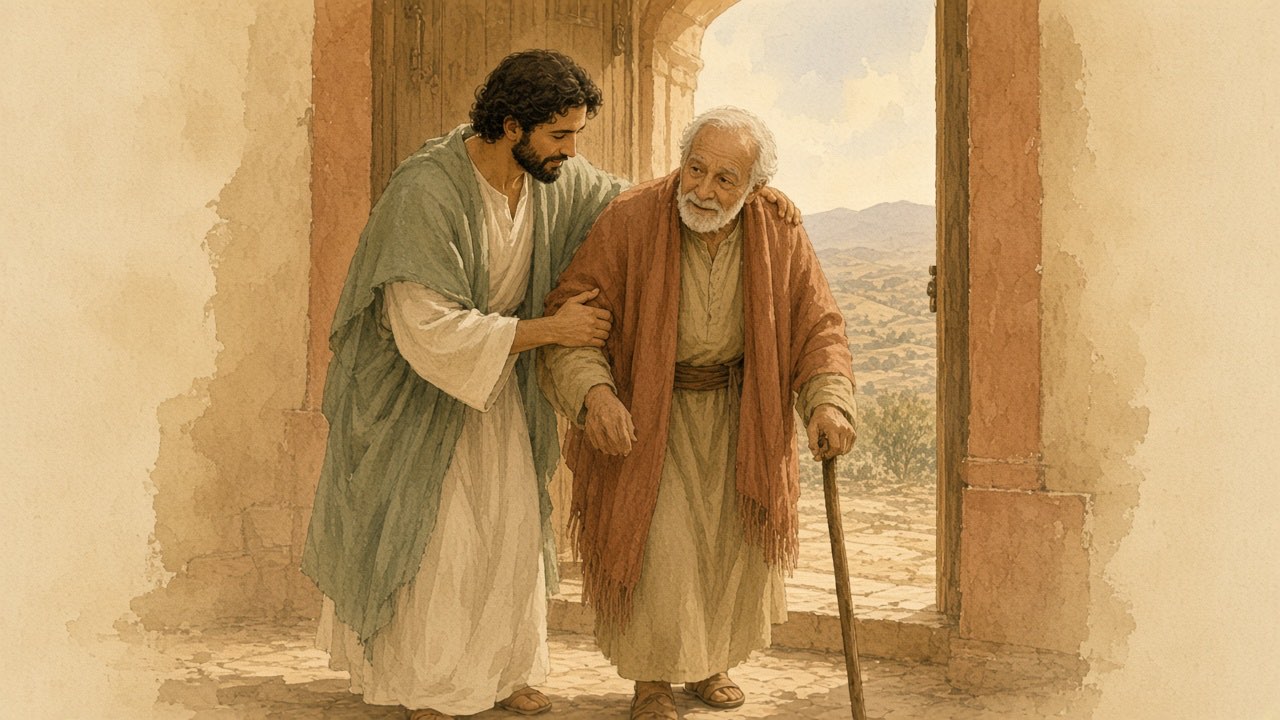
For adult children—continue to honor. Honor doesn't end when you leave home. Stay connected. Seek their wisdom (even if you don't always follow it). Speak respectfully about them. Care for their practical needs as they age. 1 Timothy 5:4 says, "If a widow has children or grandchildren, these should learn first of all to put their religion into practice by caring for their own family."
For those with difficult parents. Honoring doesn't mean enabling abuse or pretending dysfunction doesn't exist. You can set healthy boundaries while still maintaining respect. You can limit contact when necessary while still praying for them. If reconciliation isn't possible, you can still forgive—releasing bitterness for your own healing.
For parents—love intentionally. Your children don't need perfection; they need presence. Invest time, not just money. Listen actively. Apologize when you fail. Model the faith you want them to embrace. Remember that you're forming souls, not just managing behavior.
For parents—discipline with purpose. Hebrews 12:11 acknowledges that "no discipline seems pleasant at the time, but painful. Later on, however, it produces a harvest of righteousness and peace." Discipline shapes character. Avoid extremes—neither harshness that embitters nor permissiveness that harms.
For everyone—build bridges. If relationships with parents are strained, take the initiative toward reconciliation. Pride prevents many families from healing. Be the one who reaches out, apologizes, or extends forgiveness—even if you weren't primarily at fault.
Conclusion
The parent-child relationship is one of life's most formative—and often most complicated—bonds. Scripture calls children to lifelong honor and parents to faithful love that reflects God's own heart. When these dynamics function according to God's design, families become havens of grace, training grounds for faith, and witnesses to a watching world.
Whatever your family situation—whether your relationships are healthy or hurting—God's grace is sufficient. He can heal wounds, restore what's broken, and teach us to love as He loves. May we be children who honor well and parents who love sacrificially, all to the glory of our heavenly Father.