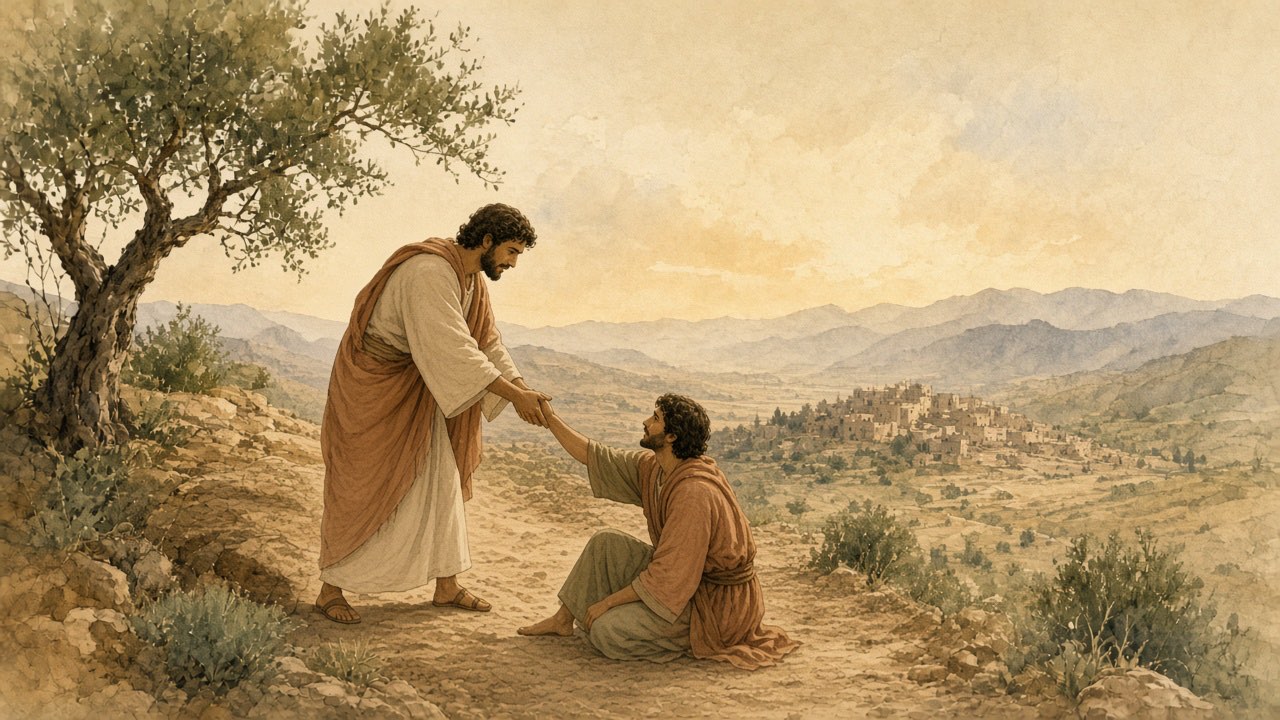
The Biblical Perspective
Mercy in the Bible stands as one of God's defining attributes and one of His most precious gifts to humanity. Compassion moves the heart; mercy moves the hand—taking action to relieve suffering, meet needs, and extend kindness to those in distress. God's mercy toward sinners becomes the model for how His people treat one another. The forgiveness we've received compels us toward loving actions that reflect our Father's heart.
Jesus quoted Hosea's declaration—"I desire mercy, not sacrifice"—twice in His ministry, signaling its importance. Religious performance without merciful action misses God's heart entirely. True spirituality isn't measured primarily by religious rituals but by how we treat the vulnerable, the broken, and the undeserving. Mercy received must become mercy given.
Key Scriptural Insights
1. God's Mercy: Attribute and Action
Throughout Scripture, mercy characterizes God's essential nature:

Exodus 34:6-7 provides God's self-description: "The LORD, the LORD, the compassionate and gracious God, slow to anger, abounding in love and faithfulness, maintaining love to thousands, and forgiving wickedness, rebellion and sin." Mercy isn't occasional with God—He abounds in it.
Lamentations 3:22-23 offers hope in grief: "Because of the LORD's great love we are not consumed, for his compassions never fail. They are new every morning; great is your faithfulness." God's mercy is inexhaustible, renewed daily.
Ephesians 2:4-5 connects mercy and salvation: "But because of his great love for us, God, who is rich in mercy, made us alive with Christ even when we were dead in transgressions." We were spiritually dead; mercy made us alive.
Key dimensions of God's mercy:
- It withholds deserved punishment: We earned death; God offered life
- It provides undeserved blessing: Beyond merely sparing punishment, God lavishes good
- It is motivated by love: Mercy flows from God's heart, not reluctant obligation
- It is available to all: No sin is too great for God's mercy (for the repentant)
2. Jesus: Mercy Incarnate
Jesus embodied mercy in His ministry. When He saw crowds, "he had compassion on them, because they were harassed and helpless, like sheep without a shepherd" (Matthew 9:36). He wept at Lazarus' tomb, moved by the grief around Him.
His miracles Often responded to cries for mercy:
- The blind man shouted, "Jesus, Son of David, have mercy on me!" (Mark 10:47) and received his sight
- Ten lepers pleaded, "Jesus, Master, have pity on us!" (Luke 17:13) and were healed
- The Canaanite woman begged, "Lord, Son of David, have mercy on me!" (Matthew 15:22) and her daughter was delivered
Jesus also taught mercy through parables:
- The Good Samaritan demonstrated mercy crossing ethnic boundaries (Luke 10:25-37)
- The Prodigal Son's father showed mercy to a shameful, wasteful son (Luke 15:11-32)
- The debtor who received mercy was condemned for refusing to extend it (Matthew 18:21-35)
In His teaching on the Beatitudes, Jesus declared: "Blessed are the merciful, for they will be shown mercy" (Matthew 5:7). Mercy given and mercy received are intimately connected.
3. The Call to Show Mercy
Scripture commands believers to extend mercy to others:
Micah 6:8 summarizes what God requires: "He has shown you, O mortal, what is good. And what does the LORD require of you? To act justly and to love mercy and to walk humbly with your God." Loving mercy isn't optional—it's foundational to righteous living.
Luke 6:36 commands: "Be merciful, just as your Father is merciful." God's mercy sets the standard for our own.
James 2:13 warns: "Judgment without mercy will be shown to anyone who has not been merciful. Mercy triumphs over judgment!" Those who refuse mercy should not expect it.
Colossians 3:12 lists mercy among essential Christian virtues: "Therefore, as God's chosen people, holy and dearly loved, clothe yourselves with compassion, kindness, humility, gentleness and patience."
Practical Application
How do we live as merciful people?
Remember how much mercy you've received. The unforgiving servant forgot his enormous forgiven debt and refused mercy to another. Regularly reflect on God's mercy to you—it softens your heart toward others.
Look for suffering and respond. The Good Samaritan saw, stopped, and served. Mercy requires seeing needs and taking action. Ask God to open your eyes to those hurting around you.
Give mercy to those who don't deserve it. If they deserved it, it wouldn't be mercy. Mercy is kindness to the undeserving—the irritating, the ungrateful, the ones who've wronged you.
Speak merciful words. Proverbs 12:18 says, "The words of the reckless pierce like swords, but the tongue of the wise brings healing." Are your words wounding or healing?
Advocate for the vulnerable. Proverbs 31:8-9 instructs: "Speak up for those who cannot speak for themselves, for the rights of all who are destitute. Speak up and judge fairly; defend the rights of the poor and needy." Mercy engages systems and structures, not just individuals.
Be patient with others' failings. Mercy means not demanding instant change or perfection. Bear with others as God bears with you.
Refuse to gossip or gloat over others' failures. Mercy covers rather than exposes. It protects reputation rather than destroying it.
Conclusion
Mercy lies at the heart of who God is and what He does. He is "rich in mercy." He delights in mercy. He desires mercy more than sacrifice. And He calls His people to be merciful as He is merciful.
When we show mercy, we image our Father. When we withhold mercy, we deny the very grace that saves us. The connection is unavoidable: those who have received mercy become merciful people—or reveal they never truly received mercy at all.
May your life be marked by compassion that notices suffering, hands that relieve need, words that heal wounds, and a heart that freely extends what it has freely received.