The Biblical Perspective
Children in the Bible occupy a place of remarkable significance. Far from being afterthoughts or burdens, children are presented as blessings from God, examples of faith, and sacred trusts requiring nurture and protection. When Jesus and children interacted, the Lord used these moments to teach profound truths about the kingdom of heaven. Scripture calls parents to the vital work of nurturing faith in the next generation while exercising discipline with love that shapes character without crushing spirits.
Biblical parenting is neither permissive nor harsh—it's purposeful. It recognizes that children are individuals created in God's image, entrusted to parents for a season, with eternal souls that matter infinitely. When we understand children through Scripture's lens, we approach parenting not as behavior management but as soul formation, not as burden but as privilege.
Key Scriptural Insights
1. Children as Blessings: The Biblical Vision
In stark contrast to cultures that view children as inconveniences or economic liabilities, Scripture consistently celebrates children as gifts from God.

Psalm 127:3-5 declares: "Children are a heritage from the LORD, offspring a reward from him. Like arrows in the hands of a warrior are children born in one's youth. Blessed is the man whose quiver is full of them."
This imagery is striking. Children are compared to arrows—valuable weapons that extend a parent's influence beyond their own reach and lifetime. A "full quiver" isn't a burden but a blessing, providing strength and legacy.
Psalm 128 continues this theme, describing the blessed family: "Your wife will be like a fruitful vine within your house; your children will be like olive shoots around your table. Yes, this will be the blessing for the man who fears the LORD" (vv. 3-4).
Throughout the Old Testament, barrenness was grieved and children were celebrated. When God promised Abraham descendants as numerous as stars, He was describing ultimate blessing. Each child born into covenant families represented God's faithfulness and future hope.
2. Jesus' Revolutionary Treatment of Children
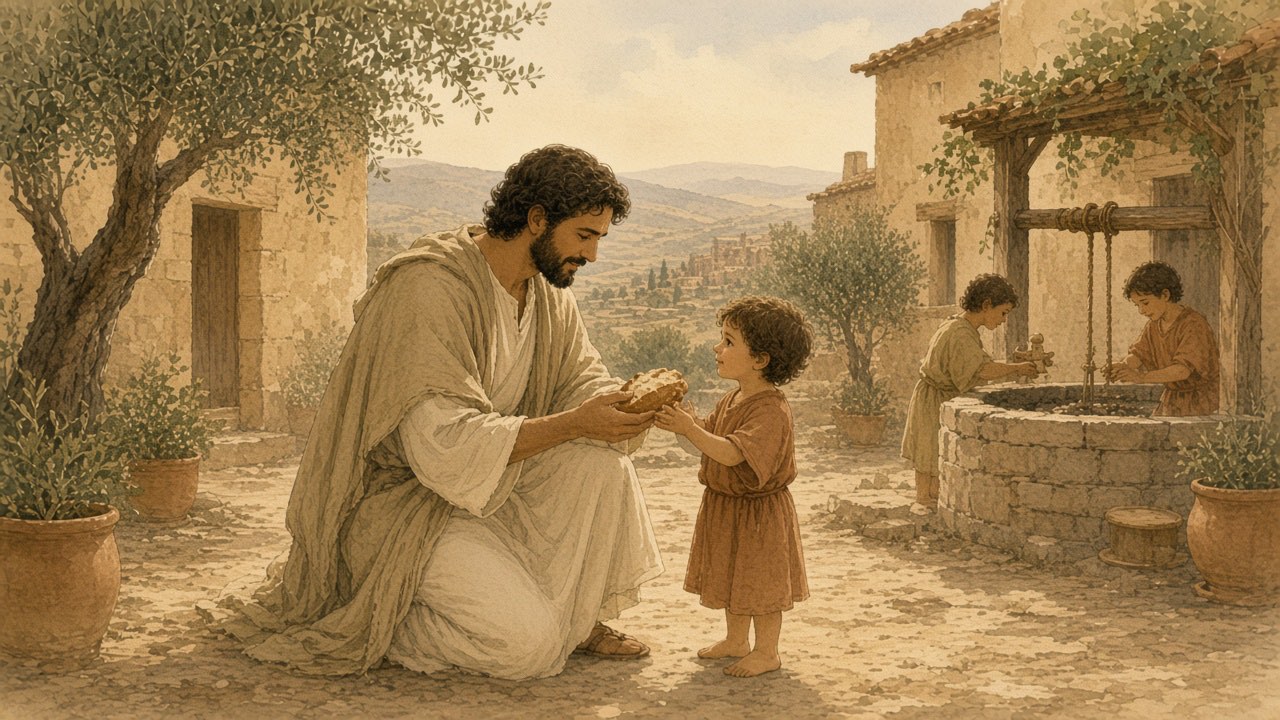
In first-century culture, children had minimal social standing. They were expected to be silent, unseen, and certainly not worthy of a rabbi's attention. Against this backdrop, Jesus' interactions with children were revolutionary.
In Matthew 19:13-15, parents brought children to Jesus for blessing, but the disciples tried to send them away—likely viewing the children as unworthy of the Master's time. Jesus rebuked His disciples: "Let the little children come to me, and do not hinder them, for the kingdom of heaven belongs to such as these."
Jesus didn't just tolerate children—He welcomed them, touched them, blessed them, and used them as examples. In Matthew 18:2-4, Jesus placed a child in the middle of His disciples and said: "Truly I tell you, unless you change and become like little children, you will never enter the kingdom of heaven. Therefore, whoever takes the lowly position of this child is the greatest in the kingdom of heaven."
Children, with their dependence, trust, and humility, model the faith Jesus calls all His followers to embrace. Far from being spiritual afterthoughts, children demonstrate the very posture required for kingdom entrance.
Jesus also issued a stern warning about causing children to stumble: "If anyone causes one of these little ones—those who believe in me—to stumble, it would be better for them to have a large millstone hung around their neck and to be drowned in the depths of the sea" (Matthew 18:6). Those who harm children face the severest judgment.
3. Nurturing Faith: Parental Responsibility
Scripture places the primary responsibility for spiritual formation squarely on parents—particularly fathers. Deuteronomy 6:6-9 commands: "These commandments that I give you today are to be on your hearts. Impress them on your children. Talk about them when you sit at home and when you walk along the road, when you lie down and when you get up."
Faith instruction isn't delegated to professionals or confined to Sunday school. It happens in the daily rhythms of life—at meals, during travel, at bedtime, and in the morning. Parents model faith through their own devotion and weave spiritual conversation into everyday moments.
Ephesians 6:4 instructs fathers: "Do not exasperate your children; instead, bring them up in the training and instruction of the Lord." This verse balances two critical elements:
- Avoid exasperation. Harsh, inconsistent, or excessive demands crush children's spirits. Parenting should encourage, not embitter.
- Provide training and instruction. Passive parenting neglects children's spiritual needs. Active discipleship shapes them toward godliness.
Proverbs 22:6 offers both promise and principle: "Start children off on the way they should go, and even when they are old they will not turn from it." Early spiritual investment pays lifelong dividends.
Practical Application
How do we love children biblically in practical, daily ways?
Prioritize presence. In our distracted age, children spell love T-I-M-E. Put down devices. Look them in the eyes. Play with them. Listen to their stories. Your undivided attention communicates their value.
Create space for faith conversations. Don't wait for formal settings. Talk about God while driving, cooking, or walking. Ask questions about their spiritual understanding. Share your own faith journey, including struggles.
Pray with and for your children. Let them hear you pray for them by name. Pray together at meals, bedtime, and during difficulties. Teach them to bring their concerns to God.
Discipline with love, not anger. Proverbs 13:24 says, "Whoever spares the rod hates their son, but the one who loves their son is careful to discipline him." Biblical discipline is purposeful correction that shapes character—not venting of parental frustration. Always discipline toward a goal, always following up with affirmation and love.
Protect their innocence. In a culture that exposes children to adult content earlier than ever, parents must be vigilant gatekeepers. Monitor media consumption. Know their friends. Create safe environments for them to grow. Guard their hearts.
Celebrate them as individuals. Each child is uniquely created by God with distinct gifts, personalities, and callings. Avoid comparing siblings. Discover what makes each child come alive. Nurture their God-given design.
Model what you teach. Children learn more from what they observe than what they hear. If you want children who love Scripture, let them see you reading it. If you want children who pray, let them witness your prayer life. Hypocrisy breeds cynicism; authenticity builds faith.
Conclusion
Children are not interruptions to our lives but one of God's primary means of shaping us and extending His kingdom. When Jesus welcomed children, He revealed the heart of God toward the young and vulnerable. When we nurture children in faith and discipline them with love, we participate in the sacred work of soul formation.
Whether you're a parent, grandparent, teacher, mentor, or simply a member of a church community, you have opportunity to influence children for eternity. Receive them as Jesus did—with open arms, undivided attention, and deep awareness of their eternal significance.
May we never hinder children from coming to Jesus, but instead point every young heart toward the Savior who loves them perfectly.